


 SIGN UP FOR OUR
 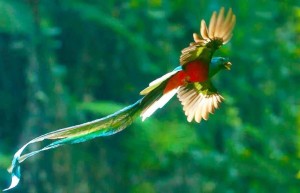 The hospitality and tourism industry of Costa Rica welcomes a diversity of tourists. From surfers to eco-tourists and from science researchers to language learners, Costa Rica loves them all –even sexual tourists, as long as they do not engage in garish behavior in public. There is, however, one special interest tourist group that Costa Rica should strive to attract for various reasons: Birdwatchers.
For the most part, birdwatchers could take the “Nicest Tourist Award” in just about any nation. A 2002 study (PDF) conducted in Australia found the following interesting facts about birdwatchers:
- They are generally well-educated.
- They tend to be affluent.
- They are ultra-conscious of nature conservation and will go to great lengths to ensure that they leave a minimal carbon footprint during their vacation.
- They are more likely to hire local guides or experts.
- They can be very competitive and passionate with regard to their chosen activity.
Birdwatchers are particularly happy with diversity, which is something that Costa Rica is blessed with. Competitive and passionate birdwatchers, known as twitchers in their unique lingo, are known to arrange their lives around lists, and the life list is the most important.
When twitchers get together over drinks (wine more often than beer, but they will enjoy an Imperial during a hot day in Guanacaste), they compare life lists. A lifer is the first-ever sighting of a species, and twitchers who get 1,000 or more lifers are allowed to brag about their birding prowess.
Reaching, or surpassing the 1,000 tick on a life list is something that can certainly be accomplished or completed in Costa Rica thanks to the country’s amazing biodiversity and the fact that many North American species like to migrate here.
Another nice aspect of twitchers is that they are a very connected and tech-savvy bunch. A twitcher in Guanacaste who gets a crippler or a megatick (a rare and majestic species such as a quetzal or other members of the Trogonidae family) will certainly tweet (no pun intended) his or her sighting, thereby sending jealous twitchers to start researching their next trip to Costa Rica.
An example of the above can be found on a recent post on Birding Craft, a blog by twitcher Pat O’Donnell of Costa Rica, in which he wrote about the seeming scarcity of raptors in this country. A fellow twitcher from Australia commented that, at 50 species of hawks, falcons and eagles, Costa Rica presents more raptor diversity than Down Under.
Exchanges like this could very well prompt twitchers who are into ticking off raptors on their life list to plan a trip to Palo Verde. For all these reasons, it is in the best interest of Costa Rica’s tourism operators to welcome birdwatchers. Also, see, Bosque de Paz – a bird watching lodge on 1,000 private acres.



