


 SIGN UP FOR OUR
 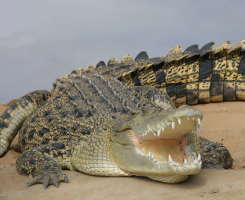 An adult male whose identity has not been revealed was attacked this morning by a caiman at the National Technical University (Spanish initials: UTN) in Atenas, canton of Grecia, province of Alajuela.
As reported by Pablo Rojas of online news daily CRHoy.com, the Red Cross municipal detachment in Atenas responded to the dangerous wildlife/human encounter around 10:00 am on Wednesday. Apparently, the victim suffered a swift bite on one of his legs, and his condition required that he be transferred to San Rafael Hospital in Alajuela for emergency care.
The victim of the reptile attack is agricultural engineer who happens to also specialize in the study of caimans. The university campus in Atenas maintains a pond where they keep several aninals for academic and research work. When the engineer was taken to the hospital, he was in stable condition. Details on the cause of the incident are unknown at this time.
This is the third incident involving caimans and humans over the couple of weeks. Crocodiles have been trapped in Jaco Beach and Quepos after they ventured into the beach and onto the sidewalks of residential neighborhoods. Earlier this year, The Costa Rica Star reported on caiman that attacked a Spanish couple who were learning to surf in Playa Tamarindo and were rescued by a local surfer. Residents of this Guanacaste coastal community noticed a sharp drop in the number of beachgoers for up to two weeks after the incident.
Conservation officials in Costa Rica recently announced an initiative to post warning signs alerting tourists about the presence of gators in certain spots. As previously reported by The Costa Rica Star:
Over the last few years, conservation officials in Costa Rica have noticed a sharp increase in caimans along the Central Pacific coast of Costa Rica. This migration from the Caribbean to the Pacific is facilitated by the numerous rivers that crisscross the country, and it mostly consisted of males that enjoy feeding in the surf but rarely approached the beach. Climate change, however, has changed this migration patterns: Whereas in the past caimans returned to the Caribbean for mating, the absence of rains in the early green season is making them confused, thus delaying their return.



