


 SIGN UP FOR OUR
 By Wendy Anders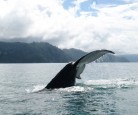
Whales have started arriving to the waters off the southern Costa Rican Pacific coast for this year’s second whale-watching season
Look for special activities such as festivals, whale watching tours, and other local activities on the southern Pacific coast during August and September.
The National Ballena Marina Park, Playa Dominical, Dominicalito, Bajo Negro and other beaches surrounding the mouth of the Térraba river are the best sites for whale watching, reports TV Sur Canal 14 out of San Isidro el General in southern Costa Rica.
The most anticipated of all marine animales are the humpback whales with their stunning acrobatic leaps and fin slapping. According to the Marine Mammal Center based in California, there seem to be three distinct populations of humpback whales that do not interact with one another, “one in the North Pacific, one in the North Atlantic, and another in the Southern Hemisphere (south of the equator).”
The North Pacific group, estimated at around 15,000 whales, feed in the summer along the coast from California to Alaska and migrate in the winter (January-April) to breeding grounds off of Hawaii, Mexico, Costa Rica, and Japan, according to the Marine Center.
The Southern Hemisphere humpbacks are the ones that can be seen in southern Costa Rica starting in late July and until about October when they come up from cold southern waters to feed and birth their calves.
“Humpbacks are among the most endangered whales and fewer than 10 percent of their original population remains. The current word population is estimated between 35-40,000,” said the Marine Mammal Center, a non-profit marine rescue and research center, on their website.
The Costa Rican Tourism Institute reports that over 100,000 tourists visited the country for whale watching in 2014.



