


 SIGN UP FOR OUR
 By Wendy Anders
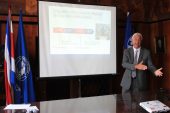
Glen Gaulton from University of Pennsylvania’s School of Medicine gives a talk.
The University of Pennsylvania Perelman School of Medicine signed an academic cooperation agreement with Costa Rica’s Ministry of Health last week to lend their expertise to collaborative research projects, reported the Health Ministry.
Areas of interest include oncology, neurological diseases such as epilepsy and multiple sclerosis, and cardiovascular disease (such as Wilson’s disease and diabetes), said official sources.
With new regulations on biomedical research in place, which are overseen by the National Council of Health Research (CONIS) and the scientific ethics committee, Costa Rica has the foundation for increased clinical research, said Luis Tacsan Chen, the health ministry’s director of scientific and technological development.
Tacsan said at a press conference that the Ministry of Health would start by creating research units at the country’s public and private hospitals.
The agreement was signed by Costa Rican Minister of Health Dr. Fernando Llorca Castro and Dr. Glen N. Gaulton, Vice Dean and director of the Center for Global Health at the University of Pennsylvania.
Gaulton gave a talk entitled “The Future of Precision Medicine,” to various health, foreign affairs, and private investment leaders in Costa Rica.
Gaulton is a board member of Life Sciences Pennsylvania (formerly Pennsylvania Bio). The networking and advocacy group was founded in 1989 by a group of Biotech CEOs and today it represents the entire life sciences industry – medical device companies, pharmaceutical companies, investment organizations, research institutions, and myriad service industries that support the life sciences in Pennsylvania, according to the group’s website.



