


 SIGN UP FOR OUR
 Vienna, Sept. 9.- The Comprehensive Nuclear-Test-Ban Treaty Organization (CTBTO) confirmed on Friday that it has detected an “unusual seismic activity” in North Korea, indicating a possible new nuclear test by Kim Jong-un’s communist regime.
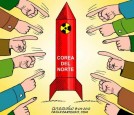
Source: Courrier International (France)
“Our monitoring stations picked up an unusual seismic event in the Democratic People’s Republic of Korea (DPRK) today at 00:30 GMT. So far 25 of our stations are contributing to the analysis. The event seems to have been slightly larger than the one our system recorded on Jan. 6 this year and the location is very similar to that event. Our initial location estimate shows that the event took place in the area of the DPRK’s nuclear test site.” according to a statement by Lassina Zerbo, executive secretary of the CTBTO.
He was referring to the previous nuclear test in January 2016 when North Korea detonated a nuclear device they claimed to be a hydrogen bomb; experts still doubt it was a hydrogen bomb.
The CTBTO currently is a UN commission that monitors the Comprehensive Nuclear-Test-Ban Treaty (CTBT) signed in 1996. The treaty is still not in full force due to the absence of ratifications from eight countries with important atomic programs, including North Korea.
The other countries that have not yet ratified the CTBT include the United States, China, Egypt, Israel, Iran, India and Pakistan.
However, the CTBTO has a network of 300 monitoring stations worldwide, which can detect any unusual detonation or explosion in real-time.
In the past, the CTBTO sensors have detected within minutes North Korea;s previous detonations of nuclear bombs.
The seismic data as well as the atomic contamination are collected in a large data center at the CTBTO headquarters in Vienna, Austria, and from there are sent to member countries.
At the moment, the CTBTO has not confirmed that its stations have detected radioactive particles in the air in NorthKorea, which would be the final confirmation that this was a nuclear test.
The earthquake on Friday was detected at 9.30 am Seoul time (00.30 GMT) near the Punggye-ri Nuclear Test Site, the place where the previous four North Korean nuclear bombs were tested: in 2006, 2009, 2013 and in January of this year.
A month after the last trial, North Korea launched a rocket with ballistic missile technology, which led to harsh sanctions from the UN. EFE



