


 SIGN UP FOR OUR
 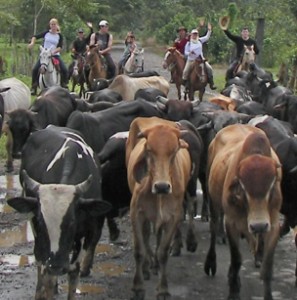 Buying meat in Costa Rica can be like a lottery – unless one has a trusted carnicero there is always doubt whether the meat will be tender and succulent or tough as shoe leather, hence the nickname “mystery meat” – especially when buying from a pulpería.
But after yet another recent experience of eating an almost inedible but expensive steak, I decided to delve into the matter and was amazed, because I had always assumed the meat was tough because of free ranging tropical cows or something like that.
Whether or not meat is tender and tasty, or tough with an off flavor is determined by several important factors. I found that genetics, the particular breed of the animal, is not necessarily a major factor. More important is the age of the animal when sacrificed; the older the animal is, the less tender. This is because the gristle (collogen) connective tissue becomes thicker and harder in an older animal.
The animal’s age is usually the major factor in countries where beef is inspected, graded, and certified. Costa Rica does not have this yet, but fortunately, changes are on the way. Choice beef usually come from cows slaughtered at between 9 and 30 months of age, but especially in cows used for breeding and milk, the time for sacrifice may be up to even 15 years. An animal over 40 months of age is usually considered not choice but commercial grade beef.
Surprisingly enough, what the animal eats doesn’t have much influence over its tenderness. Animals eating grain get fatter earlier than pasture fed animals, and so are younger and therefore slightly more tender.
The particular cut of meat you buy is of course, important too. Generally speaking, the meat increases in tenderness the farther it is from hooves and horns; the animal’s neck and leg muscles are the toughest and have the most connective tissue.
The chart below will give you a general idea of the major cuts and where they come from:
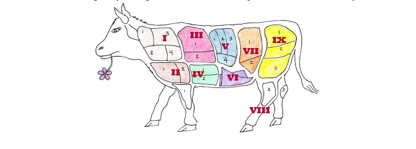
I. Diezmillo: Chuck
1. Pecuezo: neck
2. Paleta: shoulder
3. Diezmillo: blade roasts, steaks
4. Diezmillo: Cross rib roast
II. Pecho: brisket
1. Res para guisar: stewing beef
2. Pecho: brisket
III. Entrecot: rib
1. Costillar: rib roast or steak
IV. Agujas: short plate
1. Agujas cortas: short ribs
2. Arrachera: skirt steak
V. Filete: short loin
1. Chulete de filete: top loin steak
2. T-bone: T-bone
3. Chuleta de los lomos: porterhouse
(filet mignon from either)
VI. Falda: flank
1. Agujas : short ribs
VII. Somomillo: Sirloin
1.. Chuleta de somomillo: sirloin steak
2. Somomillo en trozo: sirloin tip roast
VIII. Tapa: round
1. Tapa: top round
2. Cuete: bottom round, eye of round
3. Bola or empuye: tip roast, steaks
IX. Chambarete: shank
1. Chambarete de mano: fore shank
2. Chambarete de pata: rear shank
Please note that every country has its own cuts of meat and different names for them. It is impossible therefore to make a direct translation, as the cuts don’t directly match up. (Chart used by permission by Karen Hursh Graber).
Another very important determinant of meat tenderness is, unfortunately, the amount of concern for the animal’s welfare prior to and at the time of slaughter. Traveling for many hours in an overcrowded truck, for example, tends to make them stressed, tired, and distressed when they arrive at the abattoir. Their adrenalin soars; their muscles tense up and stay that way.
However, the key factor in the quality of beef is in the processing, and the main part of this is aging. Most beef consumed here in Costa Rica has not been aged, and for that reason, frequently has a “metallic” taste, not very tender, and lacks a typical beef flavor. In beef, flavor and tenderness increases with the amount of time the beef is aged under controlled conditions to prevent bacterial growth, to maintain moisture, and to promote tenderness and savor. Sometimes the meat here is immediately butchered and sold fresh or frozen, something that causes it to be extremely tough.
Most of the meat here is not aged, because the costs can be high, not only in refrigeration costs, but also in weight loss of the beef (up to 15% or more), plus the time, storage space, and labor –which add to the retail cost of the meat. The aging process covers the time in days from slaughter to making the retail cuts. It normally ranges from 7 to 15 days.
While there are several different methods of aging, it is normally done under a controlled temperature of 34 to 38 degress Fahrenheit, with the beef carcasses hung on hooks in a way that their weight is used to stretch the muscles to enhance tenderness.
In Pérez Zeledón, Tres Jotas is the pioneer in being the first to age and vacuum pack all meat and distribute it under optimum temperatures. They employ modern meat processing practices using state of the art technology and equipment. Concern for the welfare of the animals, hygiene, and providing consumers with quality beef and pork are their prime priorities.
A relatively new company, they are fast growing and presently blanket the entire Southern Region of the country, providing superior quality meat to restaurants, hotels, supermarkets, and even pulperías from Cuidad Neilly to Quepos and Jaco to Los Santos and everything in between. Their next step is to cover the Central Valley and later the entire country with their impressive fleet of refrigerated trucks and highly organized delivery system. Down the road, they plan to go international.
At Tres Jotas, the cattle are raised to maturity in ample green pastures and stables.
When I first came to Costa Rica, fresh meat was openly displayed in the carnicerías, hanging on hooks and covered with flies. Now every carnicería refrigerates the meat, a momentous but almost imperceptible evolution in the meat industry. Now another one is coming: Tres Jotas, with their highly successful model, will undoubtedly cause others to follow, as will greater inspection measures, grading, certifying and packaging meats as is done in the States and Europe.
In the interim, here are some tips to follow to get the most of what there is available now:
-If you freeze meat, your freezer temperature should be around 0 Fahrenheit to ensure rapid freezing with small ice crystals. When meat is slowly frozen, larger ice crystals are formed, and when thawed, more juices are lost, which makes the meat seem tougher and with less flavor. Thawing, on the other hand, should be slow, preferably in the refrigerator or in the sink with running water, as fast-thawing the meat in a microwave can make it significantly tougher.
-Cuts low in connective tissue, like rib steaks and loin chops, should be cooked at a higher, dry heat such as frying, broiling, roasting, and grilling on the barbeque. Cuts high in connective tissue, like flank steak, round steak, and chuck, should be cooked longer at lower temperatures for best results.
-Most of the beef here is grass fed, and especially with this kind of beef it is a good idea to let it warm to room temp before cooking it, and if it is to be fried or grilled, rubbed with oil first. Also, the degree of “doneness” is important; grass fed beef loses much of its tenderness and juiciness when cooked to well done.
-Basically, anything acid, such as Coca Cola, vinegar, pineapples, and lemons, will work through breaking down meat fibers. Salt, baking soda and marinades also work quite well, as does the old fashioned meat hammer, as it also breaks down the tough meat fibers. Asking the carnicero to “pass the meat by the machine” also can help.
-Chinese restaurants regularly use baking soda (sodium bicarbonate) to tenderize smaller cuts of meat like fajitas. It’s done like this: slice the meat against the grain, then rub about 1 teaspoon of baking soda per pound into it, let it sit for about 2 hours, then wash and dry the meat and it’s ready to be cooked.
-Salt works by relaxing the muscles of thicker steaks and chops. Coat (not just sprinkle) them very liberally with salt, let them sit from 20 to 60 minutes, wash and dry them, and then rub them with oil and fry or grill them. They will come out succulent and tender, but probably won’t need additional salt.
-When cooking meats in a liquid, add a tablespoon of white vinegar, or just a little Coca Cola, and the meat will come out tender and juicy. When you buy a pineapple or papaya, save the rinds and put them in a plastic bag together with the meat, leave them overnight in the fridge, and the meat will be tender and flavorful.
-Marinades can be made from acidic fruit juices such as lemon, pineapple, and mandarinas. Wine is also commonly used to infuse more flavor, and garlic, onions and spices and herbs can also be added to enhance a particular flavor. The time the meat is marinated largely depends on its toughness and can be from couple of hours to overnight. Marinades should never be used at room temperature, but always in the refrigerator.



