


 SIGN UP FOR OUR
  A United States federal district court in Miami recently sentenced a Miami-based supplier of organic fruit and vegetable products for tricking clients into believing that their food products came from Costa Rica. The company in question operated under the name Pure Nature Organics, and in 2007 it sold broccoli and green beans labeled as produce grown in Costa Rica. In reality, the produce came from the People’s Republic of China.
Pure Nature Organics got away with the mislabeling for a few months. The U.S. Food and Drug Administration (FDA) launched an investigation and found that the country of origin was not Costa Rica. Pure Nature Organics was sentenced to three years probation and ordered to pay a $50,000 fine. The FDA found no other problems with the Chinese broccoli or green beans.
While broccoli and green beans are not iconic food products for Costa Rica, at least not in the magnitude of coffee and bananas, consumers abroad have come to associate a certain degree of taste, freshness and quality in produce grown in our country. How much value does the country of origin add to food products? Are pineapples grown in Hawaii better than the ones from Costa Rica? In the case of the mislabeled Chinese broccoli and beans mentioned above, could consumers really taste the difference?
Marketing can add a lot of value to food after it has been processed and packaged, but as a general rule the sensory factors of food -like appearance, texture, scent, and taste- are what really keep consumers coming back for more. Some brands like Cafe Britt use Costa Rica as a strong branding point, but other food products made in our country and successfully distributed abroad do not rely so heavily on marketing the country of origin.
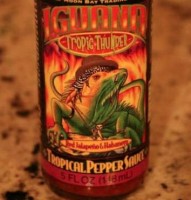
The Half Moon Bay Trading Company is known for their quality hot sauces and condiments. They are named after a geographic place in Jamaica, but their manufacturing plant in based in Costa Rica. The company’s marketing of the country of origin is limited to a few sentences:
“[our] manufacturing facility is located in tranquil Santa Domingo de Heredia in Costa Rica, overlooking the volcano Poas and bustling San José. Plenty of tropical ingredients, rich volcanic soil and abundant sunshine – that’s the magic combination that keeps the Costa Rican facility humming.”
Another example is Casa Phillips, a frozen food manufacturer of gourmet snacks in Alajuela and Liberia -close to our international airports. Casa Phillips specializes in airline catering and private label frozen meals, but their marketing is geared towards wholesale clients rather than to consumers:
“Producing your private food labels from Casa Phillips, Costa Rica, means high quality – low cost service. The minimum salary for a Costa Rican worker is around $1.38 an hour compared to $7.25 in the USA. This means a man-hour is almost 5.5 times cheaper in Costa Rica.
Costa Rica has a Social Security System which provides universal insurance benefits covering medical services, disability, maternity, retirement, and death. Costa Rican workers are well educated, with high literacy rates.”
While some of the items on Casa Phillips’ menu are folkloric dishes like fried cheese empanadas and black bean turnovers made with green plantains, most of their offerings are familiar international fare like spinach quiche and lasagna. A consumer sitting at a breakfast table in Wichita Falls or aboard a 747 flying across the Atlantic may never know that their food was prepared by Casa Phillips in Costa Rica using local ingredients. Would it really make a difference?



