


 SIGN UP FOR OUR
  On Thursday, March 29, El Financiero published an article on a Deloitte technology marketing study for 2012. While Deloitte gave the presentation at Costa Rica Country Club, all the videos and PDF documents for the Technology, Media & Telecommunications (TMT) study are available from Deloitte’s Web site. This is a global study that discusses TMT trends for this year, and does not focus on a single country.
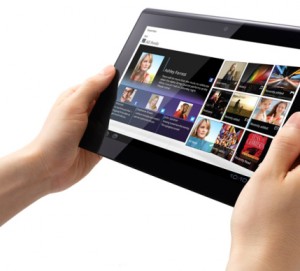
Deloitte predicts continued growth in the tablet market, with many homes having more than one tablet. While Apple currently dominates the tablet market, the largest growth segment will be in tablets that cost less than $200. It so happens that the vast majority of these tablets use Android as an operating system. In Costa Rica, Tico Movil has Wi-Fi only Android tablets beginning at 94,091 colones ($188 USD), with iPad 2 tablets starting at 356,020 colones ($712 USD). The prices for 3G tablets are much higher. For example, the Samsung Galaxy Tab 10.1 sells for around 460,000 colones ($920 USD) from Celulares Costa Rica. The low cost of the Wi-Fi only tablets makes them more attractive to most consumers, as an alternative to a desktop or laptop.
Deloitte’s predictions regarding the continued growth of smartphones is not surprising, nor is their prediction regarding the growth of low to middle cost smartphones. In the USA, for example, the number of active smartphones exceeds the number of active traditional phones. As the StatCounter graphic for Costa Rica illustrates, the growth of smartphones comes at the expense of traditional phones. The graphic also shows the rapid growth of smartphones in the last six moths. For a majority of consumers, low cost Android phones are going to drive the growth of Android phones. For example, Kolbi/ICE offers the Blu Magic phone (Android version is Froyo) for 93,000 colones ($186 USD), where the price for an iPhone starts at 329,500 colones ($659). The phones price in Costa Rica may seem high compared to USA prices, but you need to remember that all smartphones in Costa Rica are unlocked international quad-band GSM phones. In the USA, low cost smartphones are often locked dual-band phones that only work for a single carrier.
Deloitte’s comments regarding the growth of NFC (Near Field Communications) are rather interesting. Deloitte maintains that NFC is as an alternative to QR Codes in retail marketing. NFC is a radio communications technology using extremely low power. To communicate, two NFC enabled devices must be within a few centimeters of each other. The common use of NFC is to transfer information between two smartphones. The reliable distance is so small that the phones need to be literally taped together. In retail use, they could be used for point-of-sale payments (Google Wallet), or reading promotional information from a poster that contains an NFC chip, known as a “tag.” Currently, only high-end smartphones support NFC. For it to become popular, the low to middle price phones need to include this feature. Where NFC requires a special chip, QR Codes just require printing on any media, and nothing more than a camera and QR Code app to transfer information. If you happen to be in the food court at MultiPlaza, you will see QR Codes in the promotional advertising on some of the tables. QR Codes are becoming more popular in Costa Rica, but I have not seen any use of NFC in retail marketing. There is no question that smartphones are going to play a bigger role in marketing. For Costa Rica, the QR Code has the potential to reach more mobile consumers than NFC tagging.
The Unlimited 3G Internet Plans in Costa Rica under Scrutiny reflects the growing smartphone demand on the 3G network. A recent Huffington Post article states that the iPhone 4S consumes double the data of an iPhone 4, and almost three times the data of an iPhone 3G. More importantly, the iPhone 4S consumes more data than any phone on the market. The increase in data consumption by smartphones makes the unlimited plan unsustainable. It is like providing an unlimited talk plan, where a person is on the phone for 24 hours pays the same rate as the person who is on the phone for 5 minutes. Changing to a “fair use” policy simply means that the phone user would pay for the services consumed. Beyond cell phones, this change is going to have a major impact on customers who use a USB data card as their primary means of connecting to the Internet in Costa Rica.



