


 SIGN UP FOR OUR
 — Between 2013 to July 2017, 36,081 irregular migrants entered Costa Rica through Paso Canoas on the Panamanian border, according to immigration officials.


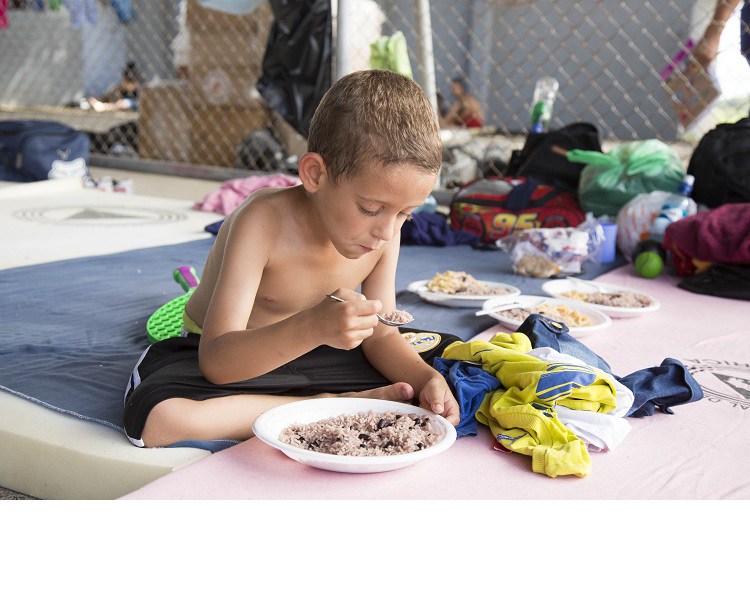
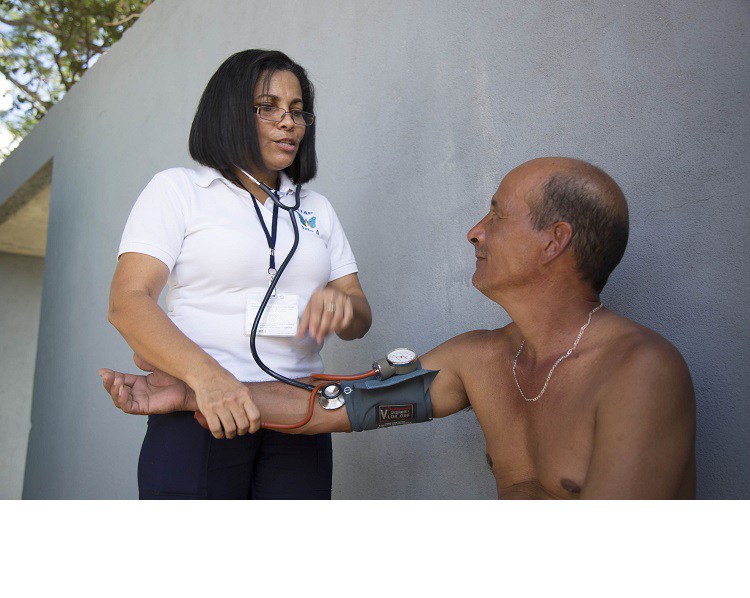

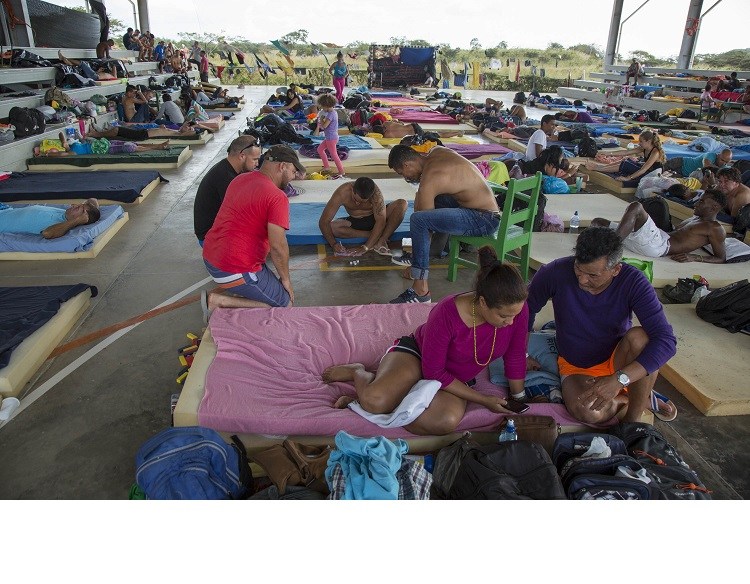
Towards the end of 2015 and into 2016, Costa Rica faced a surge in irregular migrants for which it was not prepared, said the government press office today, and that forced institutions and communities to respond to the emergency.
First thousands of Cubans, and then Africans and Haitians were stuck in the country, trapped between their irregular immigration status and the closure of the northern border with Nicaragua, continued the statement.
With more than 27,000 arrivals in less than two years primarily at the southern border with Panama, and over 36,000 migrants seeking to pass through Costa Rica since 2013, the country’s emergency response and humanitarian aid systems were put to the test in what the government has termed, “An unprecedented challenge for the country.”
By basing its response to the situation from a human rights perspective and basing its actions on the national principle of mutual aid, Costa Rica weathered the unexpected tide of migration well. And the lessons learned continue to benefit those who risk their lives to seek a better situation by passing through Central America en route to the U.S.
By the end of 2014, the 6,152 irregular migrants registered along the Panamanian border area represented an increase of more than 100 percent over the previous year. However, the 21,187 that came in 2015, a 244 percent increase over the previous year, called for an entirely new system to be created.
“The situation was very complicated for the country, there were no resources available for this, nor was there any way to address this population within the normal operations of the institutions,” said Gisela Yockchen, director of migration, when she recalls those chaotic months.
In November 2015, shortly after authorities dismantled an Ecuadorian human trafficking network aiding Cubans travelto the United States, Nicaragua decided to close its border to these migrants.
“To deal with this situation, it was necessary to improvise and resort to the country’s institutions that handle emergencies,” recalls Ivan Brenes, director of the National Emergency Commission (CNE). “The country had to take draw on the whole emergency response structure in the face of what can be called a humanitarian crisis. The CNE had to articulate the entire response process, knocking on doors of communities, businesses, churches, and organizations. We ran more than 40 shelters for over four months, staffed by more than 500 volunteers whose presence made possible the services.”
The crisis also tested Costa Rican diplomacy, said the government in a statement.
Costa Rican leaders scrambled to request urgent meetings with heads of state in Central American, Latin American and other parts of the world to seek a solution to the Cubans who were basically trapped, and with resources to feed and shelter them dwindling.
When an airlift solution was brokered with aid from different countries, and officials were about to breathe a sigh of relief, another wave of immigration came rolling along.
“No one imagined that there would be a second flow of migrants coming from Africa and South America, with a totally different scenario, other languages, different cultures, which meant a more complicated panorama for seeking support in local communities,” Yockchen said.
Brenes also agrees that the second wave was a major challenge.
“People were worn out and the migrants were very different, not only because of the language and religion; Cubans came with high levels of education, and in the second wave the people had very basic or no education. We had to seek allies, such as the University for Peace, the Spanish Agency for International Cooperation, and with the U.S. Southern Command. We managed to get funds to build a camp, and a migrant assistance center in the southern border region,” explained Brenes.
This second flow of irregular migrants began to decline towards the end of 2016.
“Some 2,000 people were arriving monthly, but in December 2016 it dropped 90 percent, and now it remains constant, with some 200 people who may be entering per month,” explained Yockchen.
The director of migration emphasized that the country is now much better prepared to handle migratory issues.
“The presidency instated a human rights approach for dealing with these situations. And the General Directorate of Migration (DGME) is now empowered and applies a comprehensive approach based on the protection of human rights and national security, that is now part of our daily operations. We created a differentiated process to serve this population with centers and controls to manage and contain migrant with dangerous background. In the end it is a lesson learned,” detailed Yockchen.
Brenes said that although changes in the types of immigration to the country began to be seen around 2012, the country’s migration policies were more focused on tourists. Now immigration services are better equipped to handle an array of arrivals.
The country’s Migrant Care Centers are managed by the DGME, and the agency no longer requires the enactment of an executive emergency decree in order to activate and coordinate Costa Rican institutions to respond to surges in human influxes over the borders.
The financing also no longer depends on the emergency commission, which had to allocate 1.5 billion colones from its emergency fund for humanitarian assistance.
A March 2016 study by the Organization for American States highlighted the way diverse factors, from economic to climatic, were driving new migrants to find new escape routes.
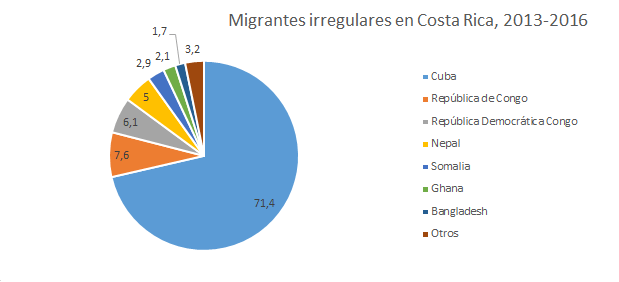
For example, violence in the Congo, which used to be distant problem, become relevant to Central America with more than 13 percent of the irregular migrants arriving in Costa Rica since 2013 originating from that conflict.
Costa Rica led the region in providing a coordinated and integral humanitarian response during these situations in 2015 and 2016, with health screenings and services, activities for children, and attempts to seek transit routes out of the country.
The OAS urged a regional cooperative approach to such situations when unexpected surges of migrants occur so that there is a shared responsibility, integrated information systems, and links with humanitarian organizations to give due respect to the human rights of these vulnerable populations.

Official migration data, 2013-2016.



