


 SIGN UP FOR OUR
 By Wendy Anders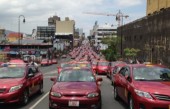
At ten this morning, the country’s public service regulator, Roberto Jiménez, received taxi sector leaders as they demanded to be heard one more time on the issue of Uber’s legality in the country.
Jiménez reiterated that his agency, the Aresep, has done everything in its power to regulate public transportation services, and that any further decisions are pending court decisions by the civil and constitutional courts.
By noon the official taxi’s promises to shut down the country indefinitely had fizzled, leaving a few injured, many with tickets, some taxi drivers upset with their leadership, and the rest of the country relieved that the streets will return to normal. Protests were concentrated in some 200 points in the greater metropolitan area, reported Columbia Radio.
One taxi leader, Gilberth Ureña, speaking to Columbia Radio said, “We did not expect such repression … we will be filing cases against the state. The movement was suspended today, but has not ended. There was too much aggression and violence. There was a cabbie with a broken arm, one with a broken nose, one person was removed from his car by force, there was damage to private property … even though there were no blockages.”
Transport Minister Carlos Villalta said in a press statement that he was very concerned about the effect of today’s road blockages on the country’s productive sector, on the airport, and on the health sector.
“We can not allow the roads to be obstructed, and people’s right to free movement cannot be limited,” said Villalta who said his office has been in dialogue with taxi drivers and has taken a clear and firm stance on illegal services being offered.
Police reported that in anticipation of the strike, private shuttles brought tourists to the airport many hours in advance of their flights. The health system reported heavy cancellations of appointments and promised to reschedule them in upcoming weeks. Producers did not report any major losses, but did incur additional expenses as they changed transportation schedules to avoid possible road blockages.
Taxi driver leaders await a meeting on August 16 with the country’s public service regulatory agency to further discuss matters. Some who feel frustrated with the short duration of today’s demonstration say other blockages and strikes may be carried out in upcoming days.
Police reported having arrested 74 people in connection with the taxi strike, three of whom are being held by the public prosecutor’s office, and the rest of whom received tickets.
Three thousand police officers were deployed to keep roads free from blockages in an operation which cost 72 million colones (roughly $132,000).
Police officer Erick Cháves was attacked by protestors in San Pedro and lost three teeth as a result; and two others reported being beaten.
One analyst at the University of Costa Rica who preferred to remain anonymous spoke with the Costa Rica Star to say she feels this situation is proving useful for the Solís government to attempt to regain popularity as the country heads into next year’s election campaign. “He used the event to paint himself as a saviour,” she said. The next presidential elections are in February 2018.



