


 SIGN UP FOR OUR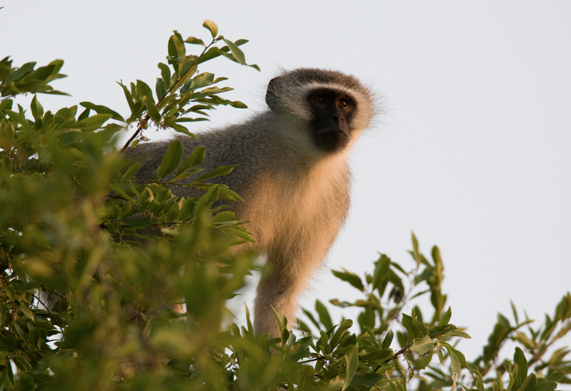
It would obviously be adaptive for some animals to be able to distinguish between natural phenomena, like wind, and phenomena that have similar effects but are caused by hidden agents like predators. One example (used in the paper below) is the rustling of trees in a tropical forest canopy. We know how to distinguish between the rustling caused by wind, which is general, and the rustling that is localized and moves slowly, like that caused by a troop of monkeys moving through the trees. (I experienced this myself on a recent trip to Costa Rica). If you’re liable to be disturbed (or eaten) by monkeys you need to pay attention to avoid the troop, but in the case of wind you don’t want to waste valuable foraging time looking up and getting nervous every time a leaf rustles.
This notion of “hidden causal agency,” of course, has been suggested as a pivotal factor in the origin of religion. If you’ve read Pascal Boyer’s provocative book Religion Explained, you’ll remember his thesis that before humans understood natural phenomena (e.g., thunder, lightning, or tree rustling), it was natural for them to impute them to causal agents—supernatural ones. This was, he thought, a “spandrel” piggybacking on our evolved notion to be alert, and to mentally ascribe natural phenomena to things that could either help us or hurt us. (For example, it’s better to think that a rustle in the bushes is a predator than to ignore it, even though there’s a “false positive” cost of interrupting your tasks because you’re hyper-alert. But better to be hyper-alert than to ignore a rustle that could kill you.) And that, says Boyer, ultimately led to religion: the ultimate belief in hidden causal agency.
So far the only animal shown to have the ability infer hidden causal agency is Homo sapiens. A dog lover told me that he’s absolutely sure that dogs can do it (caninophiles attribute all sorts of wisdom to dogs in the absence of any scientific evidence!), but so far there have been no studies demonstrating this.
To read more about this, please visit: Why Evolution Is True.



