


 SIGN UP FOR OUR
 By Wendy Anders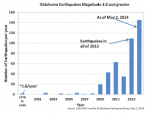
This morning at 7:02 am, 8 miles northwest of Pawnee in northern Oklahoma, U.S. near the Arkansas River, a 5.6 magnitude earthquake was registered by the U.S. Geological Survey’s Earthquake Hazards Program.
Only one injury was reported by a man who was hit by bricks falling from a chimney inside his home, said The Oklahoman, Oklahoma’s daily. One building lost its brick facade, and structural damage in buildings in Pawnee has been detected and is being investigated thoroughly. Bridges were also inspected within a 30 mile radius and none were found to be damaged.
People throughout the state and the region reported feeling this morning’s earthquake, with reports coming from San Antonio, Little Rock, Arkansas, Kansas City, Missouri and as far north as Minneapolis, Minnesota, according to reports from The Oklahoman and the Associated Press.
This is Oklahoma’s strongest quake since November 2011, and experts say it may tie the largest recorded in state history.
Over the past few years since fracking to tap underground gas and oil has increased, Oklahoma and also Kansas, have experienced sharp increases in magnitude 3.0 or greater earthquakes. These have been linked to underground disposal of wastewater from fracking, reported The Oklahoman.
“The Oklahoma Corporation Commission, which since 2013 has asked wastewater-well owners to reduce disposal volumes in parts of the state, directed about 37 wells within an approximately 725-square-mile area around the epicenter to shut down within seven to 10 days because of previous connections between the injection of wastewater and earthquakes,” said The Oklahoman.
“The area where the quake was centered saw a magnitude 3.2 temblor earlier this week and is on the edge of a region covered by a ‘regional earthquake response plan’ issued in March by the state Corporation Commission, whose goal was the cut the number of earthquakes by reducing wastewater injection volume by 40 percent from 2014 levels,” concluded The Oklahoman.



