


 SIGN UP FOR OUR
 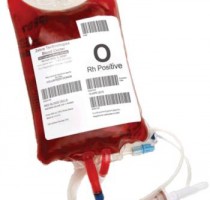 On June 14th, Costa Rica celebrated World Blood Donor Day with a shortage. The director of the National Blood Bank, Erna Melendez, made the rounds of various media outlets and called upon Ticos to step up their donations, which earlier this year were estimated to be around 150 per day. According to microbiologist Sebastian Molina of the National Blood Bank of Costa Rica, the adequate and sustainable number of daily donations should be around 200 per day.
The estimates cited in the paragraph above are not consistent with the public relations campaign conducted by La Caja, the public health system of Costa Rica. On June 14th, the Internet portal “Yo Estoy Seguro” (I Am Covered) called on Ticos to donate and stated that 115 donors per day were needed. Moreover, the Internet portal stated that regular donors could give the gift of life every three months, while Mr. Molina told La Caja back in January that the frequency was every four months. To that end, the National Blood Bank developed a donation drive program to encourage employees of certain companies to donate three times a year.
The conflicting information does not take away from the fact that blood bank shortages in Costa Rica are too common. Hospitals in need of emergency transfusions are often forced to make rushed announcements that are broadcast on commercial radio stations or disseminated via word of mouth and social media. Regional hospitals can’t always rely on relatives or the community to donate blood in the nick of time, and thus the National Blood Bank has been looking into legislation that will help modernize the system and instill a culture of blood donation in Costa Rica.
The Business of Blood
In countries like the United States, for-profit blood bank operations are part of a lucrative industry. According to “The Blood Brokers“, a book by Gilbert M. Gaul of the Philadelphia Inquirer:
The buying and selling of blood has become big business in America – a multibillion-dollar industry that is largely unregulated by the government.
Each year, unknown to the people who give the blood, blood banks buy and sell more than a million pints from one another, shifting blood all over the country and generating an estimated $50 million in revenues.
Could a thriving blood collection and brokering industry be the answer to Costa Rica’s constant shortages?
Aside from increasing blood drives, another goal of the National Blood Bank in Costa Rica is to be financially self-sufficient, or at least efficient in the sense that it can continue to provide services to La Caja within the budget it gets from public funds.
In a 2004 paper written for the Children’s Hospital Journal, Dr. Daniel Fernandez from the Monsignor Sanabria Hospital in Puntarenas explained that in 1996 La Caja commissioned Andersen Consulting (which would later breakup from Arthur Andersen right before the Enron scandal in the United States) to conduct a study into the financial health of the public hospitals in Costa Rica. The study concluded, among other things, that any service financed by La Caja must be funded only in accordance with its effectiveness. Should La Caja follow this recommendation, the National Blood Bank would be forced to not face shortages in order to keep receiving public funds.
In his paper, Dr. Fernandez proposed various solutions to ensure that blood banks in Costa Rica remain efficient and thus continue to enjoy funding, and he alludes to the “real-money” value of blood, but he never offers to separate the current blood bank infrastructure in Costa Rica -27 banks plus the National Blood Bank- from the oversight of La Caja. A comprehensive report in 2004 (PDF) indicated that there were three regulated private blood banks operating in Costa Rica, but the for-profit blood business is prohibited by law.



