


 SIGN UP FOR OUR

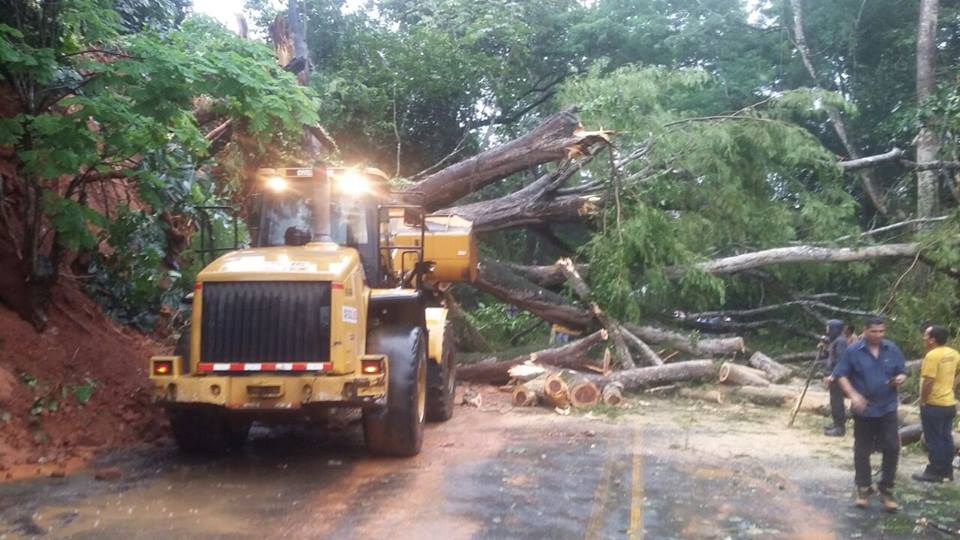
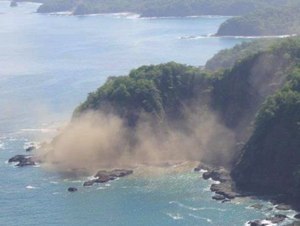
Nate is being called one of the biggest natural disasters in Costa Rica’s history by government analysts, due to its widespread heavy rains that generated destruction in all but the country’s Caribbean coastal areas.
Tropical Storm Nate which struck last Thursday, October 5, may vie for the worst disaster in the country’s modern history due to its multiple impacts and magnitude.
A national emergency was decreed after 76 of the country’s 82 counties were placed under red, or maximum, alert from the storm’s effects.
A total of 178 shelters were opened and equipped to receive 11,517 people, said the Costa Rican government’s press office in a statement.
By comparison, during Hurricane Mitch in 1998 and Hurricane Otto in 2015, 5,500 and 6,500 people respectively sought shelter in 99 shelters in the former case, and 52 in the latter. Mitch caused emergencies in 40 counties, and Otto affected 16.
A timeline of the major destructive natural events Costa Rica has experienced since 1841 is as follows:
February 9, 1841: A 6.4-magnitude earthquake destroyed Cartago with 38 deceased, and 2,480 houses destroyed.
May 4, 1910: A 6.5-magnitude earthquake also in Cartago, with an estimated 700 – 1,000 deaths and hundreds injured.
April 3, 1924: A 6.8-magnitude earthquake in Orotina.
December 30, 1952: A 6.1-magnitude earthquake in Patillos caused landslides on the slopes of the Irazu Volcano which affected livestock farms.
July 29, 1968: Arenal Volcano eruption, total destruction of the towns of Tabacón and Pueblo Nuevo.
April 14, 1973: A 6.5-magnitude earthquake with damage to Tilarán and landslides.
October 18, 1988: Hurricane Juana, floods in the south and central Pacific, 150,000 evacuees, 75 affected counties, 2,354 affected homes, and 12,531 hectares of crops damaged.
April 22, 1991: A 7.7-magnitude earthquake in Limón, damages to all Atlantic coast, landslides in the Talamanca mountain range and at least 125 deaths.
July 26, 1996: Hurricane Cesar, floods in the central and south Pacific, 126 isolated communities, 572,000 people affected, 4,600 people in shelters, 83 bridges destroyed, 29 damaged aqueducts, 5 hospitals damaged, and 101 schools damaged.
October 22, 1998: Hurricane Mitch, affected the entire country with heavy impact on the Pacific slope. 99 shelters opened, more than 5,500 people in shelters, 40 affected counties. More than 1,558 homes in high-risk areas, landslides that cut off roads, and damaged agriculture and cattle ranching.
January 8, 2009: A 6.2-magnitude earthquake struck Cinchona near Pos volcano, destroying the village of Cinchona, killing at least 30, and damaging Hwy 126.
October 31, 2010: Hurricane Thomas, landslide in Pico Blanco hill in San Antonio de Escazú, over 20 dead, 4,005 people in shelters, losses in 13,961 hectares of crops, 528 road sections and 116 bridges damaged.
September 5, 2012: A 7.6-magnitude earthquake rocked the Nicoya Peninsula of northern Guanacaste.
June 20, 2015: Floods in Limón, Turrialba and Sarapiquí leave 1,010 people in shelters, 3,395 homes affected, 247 road sections damaged, 63 damaged bridges, 48 damaged aqueducts, and 5,204 hectares of crops lost.
November 24-25, 2016: Hurricane Otto affected the northern regions of Upala and Bagaces, as well as Guatuso, San Carlos, Pococí, Río Cuarto, Sarapiquí, Osa, Golfito, Corredores, La Cruz, with 412 affected villages, 1,598 houses damaged, and thousands evacuated.
October 4, 2017: Tropical Storm Nate provoked intense rains that caused an emergency situation in 76 counties; 178 shelters were opened to house 11,361 people. More than 500 thousand people were left without potable water service and 100 thousand without electricity. Preliminarily reports include 498 sites with damaged road infrastructure and 124 thousand hectares of agricultural and livestock production damaged.



