


 SIGN UP FOR OUR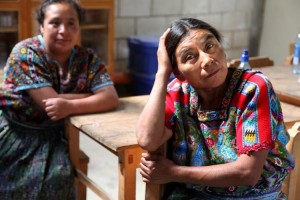
Source: User jsbarrie Flickr Commons
Guatemala City, Mar 14 (EFE).– Some indigenous people in Guatemala suffer under “contemporary forms of slavery,” the Inter-American Commission on Human Rights said Monday.
“The working conditions of indigenous people continue to be of great concern since these workers are often “subjected to different forms of exploitation” such as “forced labor” or “slave-like exploitation,” the commission said in a report presented in Guatemala City.
According to the 2008 National Agricultural Survey, cited in the analysis, there are 5,043 productive agricultural units in the country with “peon colonies” – families and communities that have survived generation after generation on the same ranch or farm, serving their “masters” for miserable wages.
The racism and discrimination suffered by indigenous peoples are readily seen, for example, in the absence of protection for their human rights in line with international standards, along with poor working conditions and the lack of basic education, health services and nutrition.
Close to 3 million Guatemalans lack access to drinking water and approximately 6 million have no access to satisfactory sanitation services.
In education, only four in every 10 children who begin school graduate, but in rural areas, according to the document, the situation is worse, since indigenous youngsters average three years or less of schooling.
Chronic malnutrition affects eight out of every 10 indigenous minors, which irreversibly impacts their capabilities for learning, working, developing and staying healthy.
All those afflictions are a consequence of the Guatemalan government’s failure to acknowledge the “genocide suffered by the Maya people during the (1960-1996) civil war.”
The 1996 Guatemalan Peace Accords ended the war and became a “historic opportunity” to move on from a cruel past and see that justice was done.
However, “most of the grave human-rights violations” committed during that era have gone unpunished. EFE



