


 SIGN UP FOR OUR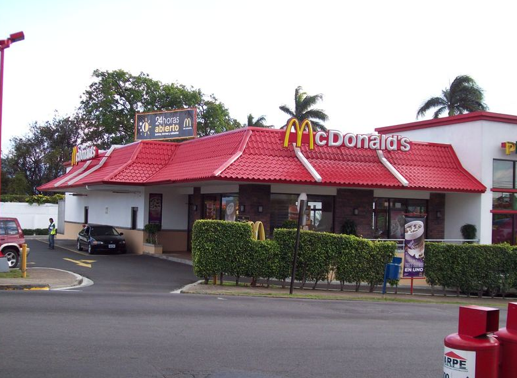
McDonald’s is not only one of the most powerful and widely-recognized brands around the world; it is also one of the most vilified. The Golden Arches have come to symbolize everything that is good and bad about globalization and the American (U.S.) way of life, and this has also led to a series of misconceptions and urban legends about this massive money-making enterprise.
In Costa Rica, the image of McDonald’s clashes with some of the slogans used by the country’s National Tourism Board (known as ICT by its initials in Spanish), such as “No Artificial Ingredients” and “The Home of All-Natural Paradises.” Still, plenty of Ticos and visitors seem to enjoy standing in long lines to sample the iconic McDonald’s menu and its culinary staples.
There are plenty of rumors and urban legends surrounding McDonald’s; they range from earthworms and synthetic meat patties engineered in underground laboratories, but those outlandish tales are not too prevalent in Costa Rica. There seem to be, however, plenty of “batazos” -dubious facts- that end up becoming tautology due to propagation and because they sound legitimate at first listen.
Here are some of the most common McMyths as they relate to Costa Rica. Many of them are debunked by recent statements made to El Financiero by Edgar Munoz, general director of franchising for McDonald’s in Costa Rica, during a recent interview with that business publication:
McMyth: There are hundreds of McDonald’s restaurants in Costa Rica! Two in every corner!
Fact: There are currently 50 McDonald’s point-of-sale locations in Costa Rica, but the company has seen impressive growth since Mr. Munoz, who started making French fries in Panama, took over in 2005. The company’s rate of expansion in 2012 was 0.6 restaurants per month, and sales increased by 13 percent.
McMyth: Costa Rica was the first country outside of the United States that Ronald McDonald’s colonized back in the 60s!
Fact: The first truly international McDonald’s restaurant was established in Richmond, British Columbia, Canada in 1967. The first McDonald’s outside of North America is the one next to the Flower Market in San Jose, across from the Central Bank and next to La Gloria department store; it opened in late December 1970, and it’s not even the first set of Golden Arches in Latin America -that would be Puerto Rico in 1967.
McMyth: McDonald’s imports all of its ingredients from the U.S. and China! Or, McDonald’s Costa Rica uses 100 percent local ingredients and that’s why everything tastes better!
Fact: There are more than 50 Tico vendors who supply 60 percent of all ingredients to McDonald’s in Costa Rica. Chicken comes from Pipasa, beef from livestock raised in Guanacaste, lettuce grown in the Orosi Valley in Cartago. According to Mr. Munoz, there are certain quality standards observed across Latin America for McDonald’s, but in some cases vendors in Costa Rica exceed those standards and become international providers. Such is the case of Impresora Delta, a Tico business that produces McDonald’s packaging for the Caribbean, Mexico and the rest of Central America. The same goes for many fruit providers in Costa Rica that export to McDonald’s restaurants outside of the country.
McMyth: McDonald’s Costa Rica has horrible working conditions, the highest employee turnover in the world and they only hire young Ticas who are forced to wear tight uniforms!
Fact: McDonald’s is a major employer in Costa Rica with a little over 2,000 employees. The company has to abide by minimum wage and other labor standards such as offering higher wages to employees who have degrees. The average age among employees is just 20 years old, with some store managers as young as 23. In some cases, McDonald’s in Costa Rica does not require a curriculum vitae (resume) or experience for some of its restaurant positions, and its turnover rate is less than 50 percent, one of the lowest among McDonald’s operations around the world.
McMyth: McDonald’s in Costa Rica is expensive! I can get a Happy Meal for a buck in Cleveland!
Fact: In many regions of the U.S., some McDonald’s restaurants have incredible periodic promotions, which seem to have been common during the Great Recession. According to the Global Big Mac Index compiled by The Economist, in early 2012 the average cost of a Big Mac in the U.S was $4.20 while in Costa Rica it was about $4.02.
McMyth: McDonald’s in Costa Rica tastes better/worse than the U.S. because of the natural ingredients/people who don’t know when to flip the bun!
Fact: As much as McDonald’s tries to streamline and standardize its operations, menus vary around the world and the restaurant workers are prone to the human condition. It is reasonable to think that the coffee will be better here, and it is also reasonable to assume that someone may have flipped the bun on a McNifica a second too early or late.
McMyth: Ticos are addicted to McDonald’s! It’s like they are hypnotized by the Golden Arches!
Fact: This might be true. Ticos are not impervious to mass marketing. Birthday parties for children are often celebrated at McDonald’s restaurants that have a playground area, and taking the family to McDonald’s just so that the little ones can run around with the toys found in Happy Meals is a Sunday tradition. This could be the reason behind the strategic placement of the McDonald’s Sundae, ice cream and milkshake stations near the entrance and in front of most central parks in several towns in Costa Rica.



