


 SIGN UP FOR OUR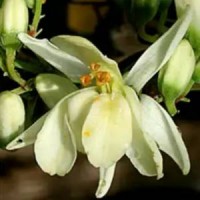
The pretty white Marango tree flower. Source: INBIO Costa Rica
There is a tree that grows in certain areas of Guanacaste and other regions of Costa Rica that -depending on who you choose to believe- could wipe out hunger on a global level, cure most diseases tied to vitamin deficiencies, boost sustainable farming practices, serve as a renewable energy source, and even make people rich in just a few weeks. This means that people in Costa Rica who grow the Marango tree have an opportunity to solve many of the world’s problems. Could this be true?
Moringa oleifera is a versatile tree that is native to the lower Himalayan regions of India. It was introduced to the northern Pacific coast of Costa Rica many decades ago for functional and ornamental purposes. Ticos call this tree Marango, but in most Spanish and English speaking countries it goes by the shortened version of its scientific name. These trees grow in dry and sandy soil conditions, which could be a reason for their planting by farmers and landowners in Nicoya, where they are sometimes planted in straight lines to serve as a fence.
Left unattended, Moringa trees can grow up to ten meters in height with powerful trunks, but they have are more attractive when their limbs are frequently cut back to produce pollards. The Moringa trees grow green foliage that produces white flowers that turn aromatic at night. The fruit is a long vine similar to that of legumes. Once the Moringa fruit -often called drumstick due to its shape- ripens, it splits open vertically to release its seed.
The Miracle Tree
Kanimambo, a non-profit organization in Costa Rica has set its sights on the Marango tree as a project for social change. The non-profit was formed by Daniel Salles Branco de Almeida and Marianela Ortega Sánchez, residents of Cartago with ties to Brazil, who a few years ago traveled to the African nation of Mozambique as humanitarians. In the deeply impoverished villages of thar country, Mr. Salles and Ms. Ortega performed lots of charitable work for the benefit of children and the elderly, from building latrines to providing health care, blankets, mosquito netting, and teaching people about Moringa, which has already being widely introduces in other parts of Africa.
In the Xangana language of Mozambique, Kanimambo means “thank you”, which Mr. Salles and Ms. Ortega must have heard numerous times while doing good work in Africa. Here in Costa Rica they have done charitable work to empower women in La Orietta, a rural community in Santa Teresita de Turrialba. They have also helped the Association for Protection of the Elderly in Calle Blancos and San Francisco de Goicochea. They are interested in raising awareness about the Moringa tree in Costa Rica, and to this end you can read the findings they have collected in this brochure (in Portuguese). Here are some highlights:
- Just about all parts of the Moringa tree, -including leaves, flowers, fruits, root, trunk, etc.- can be used for nourishment, medicine and other purposes.
- As a food, it can increase the vitamin levels of humans or animals.
- It can be used as part of a water purification system.
- It is a good fertilizer.
- It acts as an organic pesticide.
- It can accelerate the wound healing process.
- It can be used as a household cleaner.
- It can be used for biodiesel production.
The claims about the nutritional value of Moringa are even more impressive. One gram of dried Moringa leaves contains:
- 25 times the iron content of spinach
- 10 times the vitamin A content of carrots
- 17 times the calcium content of milk
- 15 times the potassium content of bananas
- 9 times the protein content of yogurt
The brochure of Kanimambo is not alone in describing the wonders of these miracle trees. Here are some excerpts The Lost Crops of Africa: Volume II: Vegetables, a book distributed by the National Academies Press, the printing arm of the United States National Academy of Sciences:
“Although few Westerners have ever heard of it, moringa is potentially one of the planet’s most valuable plants, at least in humanitarian terms.
Strangely, this tree is raised for food rather than forestry. A sort of supermarket on a trunk, it yields at least four different edibles: pods, leaves, seeds, and roots. And beyond edibles, it provides products that make village life more self-sufficient: lubricating oil, lamp oil, wood, paper, liquid fuel, skin treatments, and the means to help purify water, to name but a few. The living tree, itself, also provides such things as shade, landscaping, and shelter from the elements.
[…] It is a supreme poor-person’s plant with promise for benefiting much of rural Africa. […] this “working-class” species works, and it works well.
[…]they provide a good balance of all the essential amino acids. That alone is unusual in a plant food, but these pods also possess one of the highest vitamin C levels of any tropical vegetable, not to mention goodly quantities of vitamins A and B. And beyond all that they are among the best sources of minerals.
[…]regular consumption of the leaves is reported to increase milk production among lactating women.”
The Moringa tree seems to be nearly miraculous according to a lot of the scientific literature available. It is widely used in India, the Philippines, and many regions of Africa. Sadly, Moringa is beginning to fall prey to the multilevel marketing pyramid schemes like the infamous Mona Vie Acai Berry scam debacle of a few years ago.
The Burgeoning Moringa MLM Distribution Business
As with many other promising botanical findings, snake-oil salesmen, flimflam artists and other unsavory characters are crawling out from under hard consolidated mineral matter and plotting the next MLM pyramid scheme centered around the Moringa super tree. In the United States, the charismatic and popular Dr. Oz has featured Moringa on his show, and this has motivated people looking to cash in on this miracle tree that has so much potential to alleviate -but not solve- significant issues in impoverished regions of the world.
As with a lot of MLM pyramid scams, the Moringa schemes are mostly being created in developed countries of the Western world. One example is Zija, a line of products that includes beverages, skin lotions and tablets. The information labels in these Zija-brand products state that Moringa is the main ingredient. MLM watchdog site Behind MLM has reviewed Zija and found the following health benefit claims made by the company:
“[…] improvements in digestion, vision, mental clarity, overall well-being, plus a reduction in symptoms associated with fatigue, diabetes, high blood pressure, arthritis, and aging.
Additional benefits such as improved skin and positive mood are also reported.
“[It is]designed to enhance thermogenesis, appetite suppression, and weight control. [It acts] as a natural laxative, fat metabolizer, diuretic and appetite-suppressor.”
While Moringa is sometimes used in Ayurveda medicinal treatments, clinical research of the tree is still preliminary, so the claims by Zija cannot be substantiated. There are other MLM alarm bells that go off when reviewing the Zija business model, such as enrollment fees and the fact that potential distributors must go out and recruit new people before being allowed to sell Zija, and then there are downlines to consider, and suddenly Moringa trees are being sold like Herbalife and Amway. Zija is not the only Moringa MLM system out there.
Commercial, non-MLM Moringa businesses are cropping up all over the world. According to Radio New Zealand International, a Moringa oil extraction enterprise in the Cook Islands is showing a lot of potential. A liter of pure Moringa oil is currently valued between $50 to $500 New Zealand dollars these days, and the wide pricing range is due to speculation. The currency exchange of one New Zealand dollar was approximately $0.81 USD on August 12th, 2012.
The Silver Bullet Effect
Even Fidel Castro is singing the praises of Moringa, suggesting that Cuban farmers should switch all their crops for the miracle tree and revitalize the Cuban economy. According to an opinion piece in the Miami Herald by Carlos Alberto Montaner, this is not the first time that the aging Cuban dictator has suggested a silver bullet that catapult the Caribbean island nation out of the Third World. Switching all crops to a single tree would be a lethal blow to biodiversity, of course, but there is also the question of why India, a country that has produced millions of kilos of metric tons of Moringa fruit per year since ancient times, has struggled with regional malnourishment on various occasions.
There are a few thoughts to consider when this tree comes to mind. First, Moringa is an ingredient of popular culinary recipes in many countries -like Bangladesh, Cambodia, India, Pakistan, the Philippines, and others- but it is not the sole ingredient. In Thailand, for example, the delicious kaeng som (Thai curry) is made with Moringa fruit, but also cilantro, garlic, onions, chili peppers, lemongrass, ginger plant, coconut oil, and shrimp paste. All those ingredients mixed contain reasonable levels of vitamins, protein and minerals, even when taking Moringa out of the recipe.
The old expression about too much of a good thing being bad may also apply to Moringa. According to a recent article in Proceso, a daily newspaper from the Dominican Republic, the President of the Dominican Gastroenterology Association warned that excessive consumption of Moringa could have damaging effects on the human body and even become a carcinogen. There is also the 2003 research performed by Eduardo Chacón and Guido Saborío regarding the invasive properties of Marango trees -they are ok for casual cultivation in Costa Rica, but they can turn into a weed that crowds out other native species if not controlled.
In the end, silver bullets that guarantee solutions for vexing problems tend to be less shiny than originally thought.



