


 SIGN UP FOR OUR
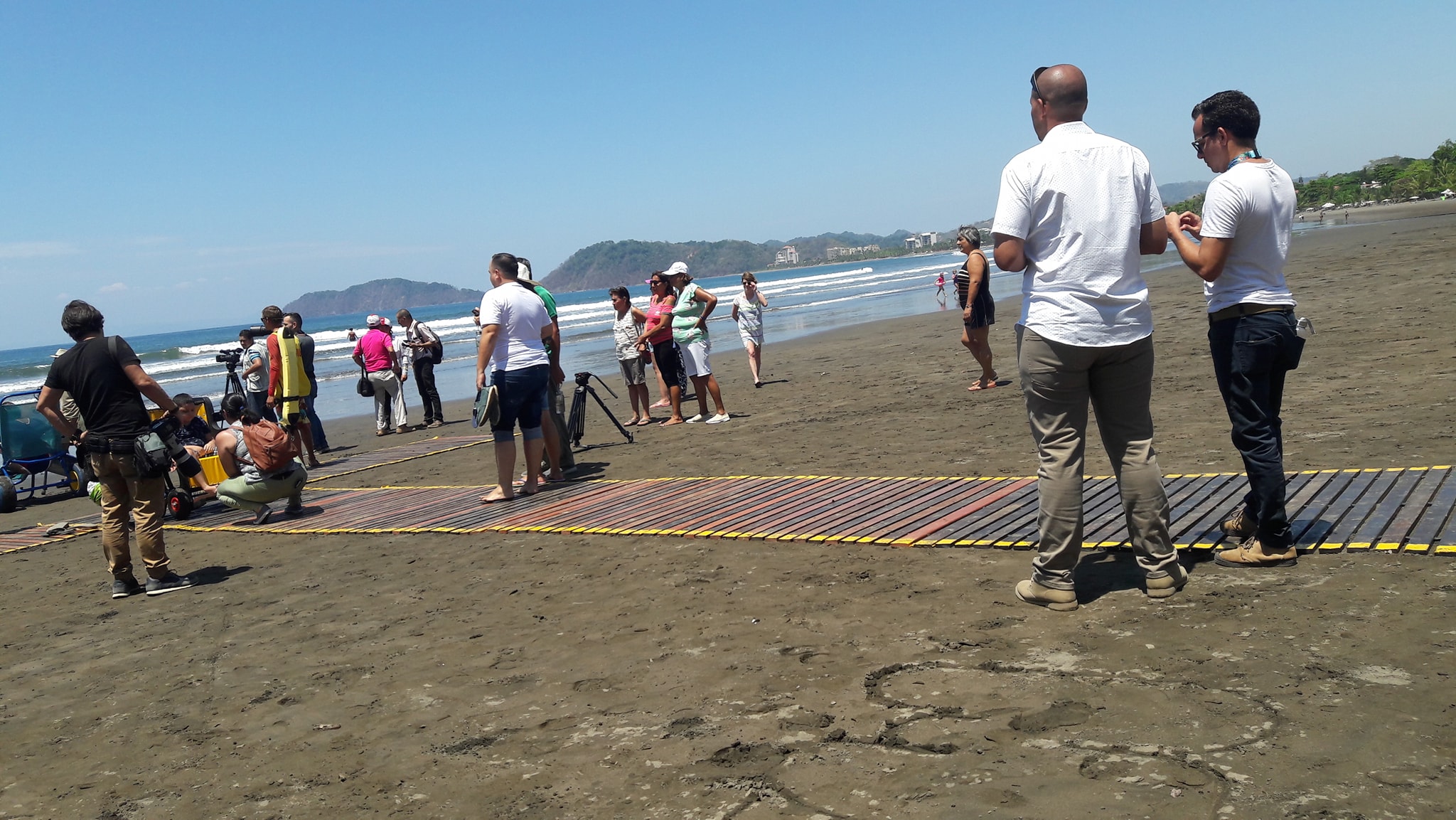
As part of a strategy of accessible tourism, Jacó beach inaugurated a 63 meter long ramp (206.70 ft.) built with recycled plastic and which gives wheelchair users access to the shore, this and other improvements and facilities made of Jacó the first fully accessible beach in Central America.
The inauguration took place this Friday, March 1st, in the frame of the Zero Discrimination Day, and it challenges other beaches and tourism destinations in the country to follow this example.
The ramp required the recollection of a total 420,000 thousand #5 plastic lids (equivalent to 840 kilograms) and 521 kilograms of #4 plastic bags which add up to a total 1,361 kilograms of recycled plastic, a sustainable example that required the active participation of thousands of Costa Ricans that for more than 7 months supported the “Donate Lid” project.
Private and public institutions that joined efforts to make this possible were present during the act, including the Adapted Surf National Team, whose members used the ramp and amphibious wheelchairs for the first time.
“For the Garabito Municipality this marks the route of the commitment to widen the options the county offers through local infrastructure with a universal vison, which must be adapted for the use of people with disabilities. We feel proud to begin the project Jacó Accessible in the sector of Playa Madrigales with the inclusion of all the elements and conditions to become the first accessible beach in Costa Rica and Central America”, commented Tobías Murillo, Mayor of Garabito.
An accessible beach must have reserved parking spaces for people with disabilities, offer close by adapted public transportation, access ramps connected to catwalks that lead to the shore; trained personnel to offer support, adapted bathrooms, locker rooms and showers, shaded areas, amphibious wheelchairs and crutches, flotation devices, buoys that define the beach area for additional security, mobile cranes or transfer aid systems, visual and resounding devices, and the possibility of practicing water sports.
“We work for the right of all people with some type of disability to enjoy being a tourist in full, and make use of the services and tourist options, from choosing the destination and lodging and transportation to visiting natural and cultural spaces”, explained Stephanie Sheehy, one of the promoters of the initiative and president of the Costa Rican Accessible Tourism Network.
According to data provided by this institution, 15% of the world population has some type of disability and 22% are senior citizens, numbers that validate the development and widening of these type of projects.



