


 SIGN UP FOR OUR
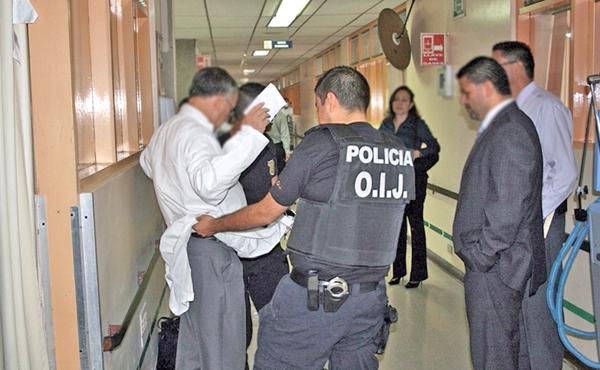
With criminal proceedings underway on a human organ trafficking case involving the trial of four Costa Rican doctors and their alleged accomplices, many interesting details are coming to light.
Intersecting forces of greed, corruption and international black markets are being identified and dissected as evidence is presented in this first of a kind trial in Costa Rica. More details will be forthcoming as prosecutors weigh testimony by numerous individuals over the next two months.
Earlier this year Colombian lawyer and human trafficking expert, Luz Estella Ortiz-Nagle, said in an interview with the Costa Rican daily La Nación about the case,
“Costa Rica may be transforming from a tiny player in the global organ trafficking trade into an epicenter for illegal organ trafficking, in large part due to corruption that has helped fuel a sophisticated transplant tourism industry as well as the global imbalance between the limited supply of kidneys and the high demand for transplants…Corrupt officials in various sectors is an essential aspect for these networks to operate successfully, given the breadth of their operations.”
Costa Rican doctors who have been charged with selling kidneys on the global black market appear to have received payments of up to $140,000 per procedure – some of which went to the doctors, some for hospital expenses, and some to Costa Rican “donors.”
It appears the network used by Costa Rican doctors to sell kidneys for transplants may be linked to the Ukraine in addition to Israel, said judicial investigator, Diego Castillo Gómez, this week during the trial, and may form part of a sophisticated global organ trafficking operation involving many countries and individuals.
Costa Rican authorities were alerted in 2012 by Ukrainian police who found a Costa Rican telephone number among evidence gathered during the arrest of two Ukrainians detained for organ trafficking, detailed Castillo.
When Costa Rican officials investigated, they discovered Francisco José Mora Palma, a kidney doctor at the Calderon Guardia public hospital in San José, had had numerous phone calls with the Ukrainian traffickers.
The organ trafficking operation appears to date back to 2011, according to a 2014 investigation by the New York Times in which Mora Palma and his group were linked with “central players in Israel’s sizeable black market for kidneys.”
This and other evidence led to Mora Palma’s arrest in June 2013. Three other doctors, also connected with the country’s public health system, were also arrested later that year for their alleged participation in illegally harvesting human organs and selling them to foreigners.
In February 2016, Costa Rican authorities brought formal charges against the doctors who participated in the organ transplant surgeries, and two others who aided in recruiting and paying low-income Costa Ricans to donate their kidneys.
Mora Palma has been charged with 14 counts of human trafficking (for harvesting organs from 14 individuals) and 16 counts of embezzlement for using public health system equipment and facilities for the procedures.
One of Mora Palma’s alleged victims, a Costan Rican National Police officer, Maureen Cordero Solano, apparently received 6 million colones (around $10,400) for one of her kidneys. She then is thought to have aided the doctors in recruiting others, receiving $1,000 for each donor she successfully brought in.
The other doctors were all Costa Ricans: Maximiliano Mauro Stamati and Fabián Fonseca Guzman (urologists), and Victor Hugo Monge (peripheral vascular specialist).
The operation was also aided by a Greek businessman, Dimosthenis Katsigiannis Karkasi, who would talk to Solano’s recruits further about donating a kidney. Donors were offered up to 10,000,000 colones (around $17,400). It is illegal in Costa Rica, as in most countries, to pay people for donating a vital organ.
Katsigiannis Karkasi ran a pizza shop across from the Calderon Guardia hospital, and was in charge of allegedly taking donors in for consultations with the doctors to initiate pre-operation procedures. the transplant surgeries were carried out in two nearby Costa Rican private hospitals: Clinica Biblica, and Clinica Catolica.
Patients who gave their kidneys were allegedly paid in cash and were requested to sign notarized declarations saying they had received no payment, according to a report on InsightCrime.org.
If the events are in fact true, there were many people turning a blind eye and/or being paid off to not say anything about what was happening in these medical centers for years.



