


 SIGN UP FOR OUR
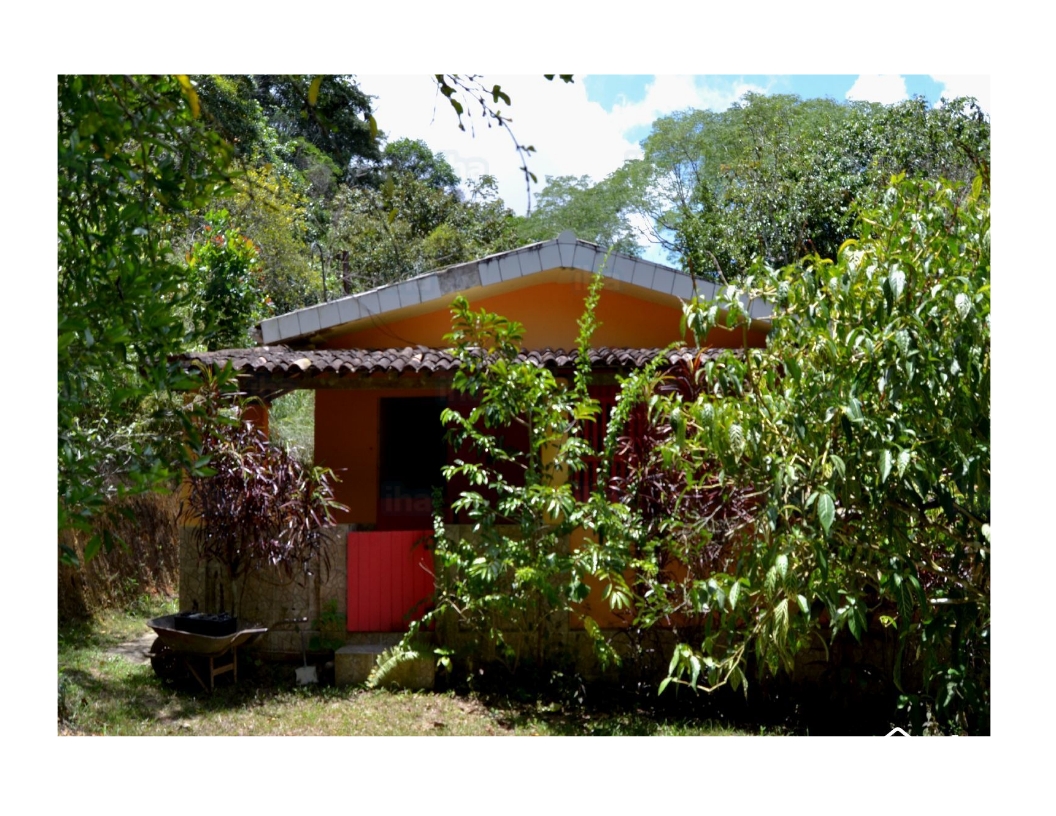
Can you really find a four-bedroom rental home in Costa Rica for $200 a month? Isn’t our country home to the most expensive real estate in Latin America? The answer to both questions is yes; in 2012, the Inter-American Development Bank declared that the most expensive and least accessible real estate in Latin America could be found in the capital city of Costa Rica. Nonetheless, I recently found a spacious, four-bedroom country home located on the northwestern edge of the Central Valley, and the monthly rent payment is just under $200.
This article will discuss the state of the rental market in Costa Rica during the first quarter of 2017, and it is part of a difficult experience I have been documenting over the last few weeks. This has also been the best part of the process because finding rental properties in Costa Rica means meeting new people and learning about new neighborhoods. I am happy to report that rental affordability can still be found in our country, although it is becoming an exception to the norm. Expats who wish to relocate to Costa Rica may feel dispirited by the high cost of living, which in many cases is exacerbated by exorbitant housing prices.
Author’s Note: I am heeding advice from two attorneys who have recommended that this report should include as little personally identifying information as possible.
This is the fourth article in a series that explains why I am getting evicted in Costa Rica. If you wish to get more background on this situation, which includes kicked doors, trespassing, shouting matches in public, dead tomato vines, and unpleasant landlord-tenant relationships, please click here for Part 1. If you would like to learn about Public Laws 7527 and 9160, which deal with leasing and tenancy, click here for Part 2, where you can also review the legal opinions of various attorneys. In Part 3, an act of vandalism presumably carried out at the behest of the landlord, who has been unpleasant to say the least, left me without electricity and water on a Sunday afternoon.
As the situation currently stands, I have been formally served with a preliminary eviction order issued by the Third Judicial Circuit of the Alajuela Province, Third Canton and First District of Grecia. If unopposed, the resolution by the court will become a de facto sentence in less than two weeks, thereby clearing the way for a potential desalojo administrativo, a forcible removal carried out by police officers. This is part of the process under the new Public Law 9160, which seeks to emulate evictions in some North American jurisdictions by means of streamlining a process that in the past used to take several months and even years at a deep financial loss to landlords.
I still plan to file a response to the eviction notice with constructive defenses, force a court hearing and file a motion for dismissal, but I will vacate the premises beforehand; this is part of a legal strategy that I may detail in a future article. For the time being, let’s look at the process of finding a rental property in Costa Rica:
Classified Listings Vs. Word-of-Mouth
Many real estate professionals in Costa Rica will tell you that some of the best deals never make it to the classified ad marketplaces or to the nascent multiple listing service (MLS), which as of 2017 can be described as a decentralized and chaotic effort. Speaking of MLS, did you know that the United States National Association of Realtors has a section for Costa Rica listings? Here you can find imposing oceanfront mansions at Hacienda Pinilla for under $60,000 per month.
Feeling nostalgic, I started my search the old-fashioned way: newspaper classified ads. The nostalgia quickly faded when I saw the prices listed in La Teja and La Nación, both printed by Grupo Nación and essentially the same classified ads. Diario Extra was better in terms of pricing and quantity of listings, but many of them were for homes and apartments located in populous districts just outside Downtown San José, we are talking about working class communities such as Hatillo and Desamparados.
I was looking for three bedrooms and found that the newspapers had quite a few listings for two bedrooms. As can be expected, prices are higher in the Central Valley, particularly in neighborhoods such as Barrio Dent, Aranjuez, Los Yoses, San Pedro, etc. Some listings in Heredia and neighboring communities such as Santo Domingo were even higher: $600 for two-bedroom homes was the average.
Although the tactile newsprint experience is nonpareil, it does not match the convenience of online classified marketplaces such as Encuentra24, Mercado Libre and OLX. I conducted my search on a cheap Chinese Android tablet; here is a brief rundown of the sites:
Encuentra24.com
This is where I found the priciest rentals. A few ads are in good English, bad English and clever Spanglish; many of these ads list prices in United States dollars instead of colones. I had to do quite a bit of filtering to narrow my options in terms of property size and price since an open search returns everything for rent: offices, commercial spaces, rooms, etc. Some of the listings in Tamarindo Beach could compete against rentals in Miami Beach.
One thing I liked a lot about this site was their selection of vacation rentals; travelers in Costa Rica, pay attention: if you are looking to rent a very nice beach house for under $100 per day in Costa Rica, you should check out Encuentra24 even before you look at Airbnb.
MercadoLibre.com
Prices are better on this site, and the layout is more attractive, but there are fewer listings. I was very interested in a couple of homes listed herein; one in Guápiles and the other in Guácimo, but their locations were a bit secluded. I also saw a remodeled two-bedroom Caribbean bungalow with plantation shutters in Punta Uvita, measuring 60 square meters and not far from the beach; it was listed for less than $250 per month. There was also a nice home in a historical neighborhood near Downtown Cartago for $320, but that one was snapped up very quickly.
The Mercado Libre website version for tablets looked so sharp that I decided to install the Android app, which is fast, intuitive and user-friendly. I had to enable lots of permissions to use the app, which means that it is probably spying on me and collecting information on constant basis. I feel as if Mercado Libre may read this article before it is published.
OLX.com
Very cheap prices in comparison to the other two marketplaces, but the layout is a bit chaotic and listings tend to remain on the site months after they have been rented. OLX.com is similar to Diario Extra in the sense that this is where you will find listings located in Hatillo, Desamparados, Alajuelita, and that section of Barrio México you really do not want to visit at night. If you don’t mind living in a neighborhood where reggaeton blares on Saturday morning, OLX is for you. This site is also ideal if you are looking to rent in Guanacaste or closer to the northern border, where you can find three-bedroom homes for $250.
The Perfect Listing
I almost settled on a couple of Mercado Libre properties that I visited; in the end, however, the home I selected was not listed in the newspapers or online marketplaces.
I have decades of experience as a tenant in Costa Rica and two other countries, and this may be the result of a less-than-stable family life; nonetheless, this experience has taught me that word-of-mouth or just walking around until you find a “For Rent” sign remains best option for prospective renters looking for bargains.
In general, landlords who simply post a “For Rent” sign on their properties instead of listing them on classified ads tend to ask for lower monthly payments and are more receptive to price negotiations. This is how I found the house I ultimately settled on; a friend was taking a Sunday motorcycle ride from Grecia to San Ramón to visit his latest girlfriend, a Hawaiian Tropic model. He saw a For Rent sign on a country home outside of Naranjo and stopped to get the phone number. It so happened that the owners live just down the road, and thus my friend got to see the house. He would have sent me photos via WhatsApp but my ancient cell phone does not support such fancy mobile functions, and thus he called me to say:
“Mae, you gotta come see this house. It is big and out in the country, just how you like it. It is cheap and the owners seem very nice; plus, I could stop by for coffee whenever I’m out riding. $200 for four bedrooms… better hurry.”
I went to check out the house the next day. It is a wooden country home that measures more than 100 square meters of living space; it features a front porch surrounded by a raised flower bed, a backyard plus a front garden. It is close to a main road where the bus stops every hour and there are two pulperías (convenience stores) within two hundred meters.
A similar property closer to the cities of Sarchí and Grecia, which are generally more attractive to expats, would cost at least $500 per month. This home is located in a small town of coffee farms and restaurants where you catch your own trout and tilapia from breeding ponds. I ended up signing a lease contract a day later, and now I owe my good friend a cold Imperial for his find.
Signing the Contract and Moving Out
All in all, I was interviewed by three landlords who seemed to be very interested in my professional life. I am a teacher, so this is kind of a plus; prospective tenants in Costa Rica should not expect extensive credit or background checks, but there will be questions about the ability to make rent payments.
Once the monthly rent payment is agreed upon, it cannot be raised for the next 12 months. Starting last year, monthly lease payments cannot be raised higher than the cumulative rate of inflation in the previous year. There is a ceiling of 10 percent per year, in which case the Ministry of Housing and Urban Dwellings intervenes to set the rate.
Tenants and landlords in Costa Rica should pay close attention to the currency of the lease agreement. If it is in dollars or any other currency other than colones, the agreed price shall become fixed and cannot be raised. This does not apply to contracts signed prior to August 2016, although they can be negotiated and redrafted.
The main aspects of rental agreements in Costa Rica are:
- Currency
- Monthly Price
- Payment Date
- Utility Payments
When electricity and water utilities are not mentioned in the contract, the following scheme applies: Landlord pays for water and tenant for electricity. It is always better to specify this issue in the contract.
Also important to note is that Public Law 7527 rules all residential lease contracts, which means that the agreement is in effect for three years and can be extended automatically unless the tenant breaks the lease with written notice a month prior to leaving the property. Landlords can break the lease with written notice three months prior to compelling tenants to leave.
When the payment due date is set, landlords should remember that tenants have seven calendar days to make this payment without being late; repeatedly demanding payment within this grace period could leave landlords wide open for a civil complaint for harassment and a court order to reimburse the tenant with at least half a rent payment. You can learn more about this in Part 1 and Part 2 of this series.
As to the cost of moving, I hired a medium-sized truck for less than $90. This includes one assistant (I will be loading and unloading as well) and will cover a distance of about 32 kilometers (20 miles).
In the end, the rental market in Costa Rica is not as vibrant as in other regions of the world, but there are bargains to be found beyond the Central Valley and outside of the expat havens. If you want to live in the hills of Escazú, in the ritzy condominiums of Santa Ana or down the road from Auto Mercado, you will pay considerably more.



