


 SIGN UP FOR OUR

On a recent Wednesday afternoon, my landlady knocked on my door and asked me if I had deposited the monthly rent payment corresponding to January. I told her I had the full payment in cash in my wallet since early January, but I was purposely waiting to deposit until the 19th day of the month, the day after her visit. She told me not to bother making the payment because she had rented the house to another tenant who would be moving in on Saturday, thus leaving me with just a couple of days to clear out the house.
“So I will come back this Friday afternoon to get the keys so I can start cleaning up. My husband found the new tenant and already got a deposit. Do you understand? Can you be out of here by Friday?”
I told the landlady that I would let her know something by Friday, I then closed the door without saying goodbye. It is now Sunday; I have no intention of leaving under her terms and have effectively stopped paying rent. I have not been formally served with an eviction notice, although I feel that it is forthcoming. I deserve to be evicted.
This article is the first of a series that will document my eviction and the vicissitudes that arise from this civil law process, which is considered to be one of the thorniest in Costa Rica. This series will be helpful for expats starting their lives in our country as renters, and also for those who may think about becoming landlords. Along the way, I will also discuss issues related to civility, anger management and keeping a vegetable garden.
Author’s Note: I am heeding advice from two attorneys who have recommended that this report should include as little personally identifying information as possible.
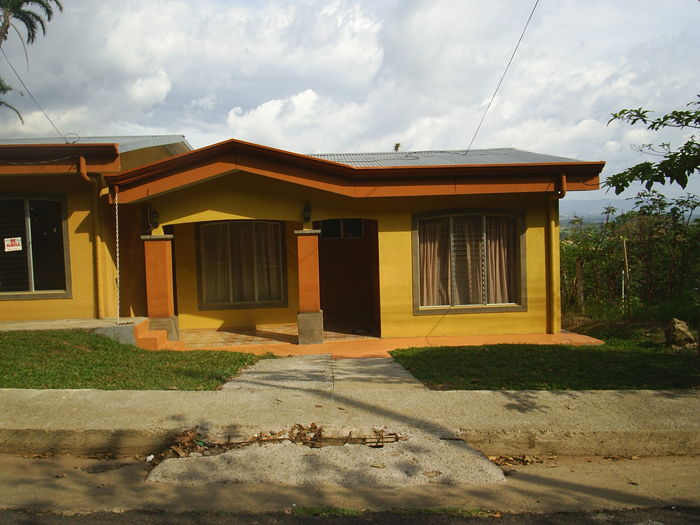
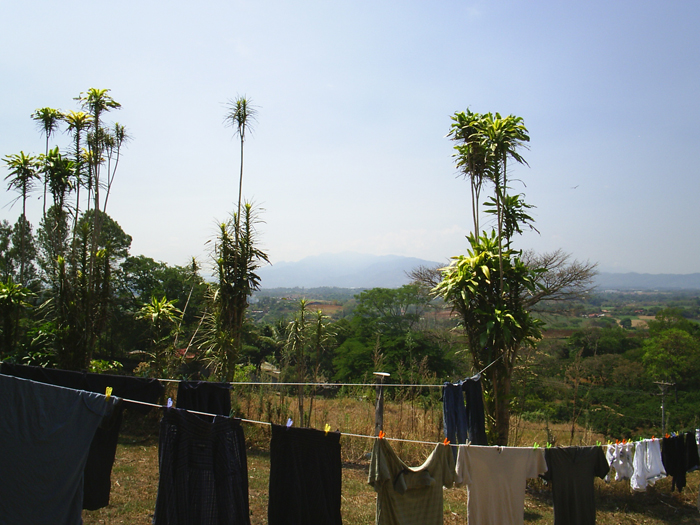
The house I am being kicked out of is located in a semi rural town outside of Grecia. I moved here seven years ago from Curridabat, where I rented a small house from a relative. I thought it was time for my mother to enjoy the charms of country life in Costa Rica, and thus I found a three-bedroom home surrounded by sugar cane and coffee fields at the edge of the Central Valley. The terrain is elevated and offers a nice vista of green valleys and blue hills; on a clear day, the edge of Puriscal is visible from my backyard, where I have grown tomatoes, cilantro, basil, squash, green onions, and rosemary.
Meet the Parties of the Rental Contract
The owner the property, Mrs. B, comes from a powerful family of landowners whose holdings include thousands of acres in three southern cantons of the Alajuela province. In the lower middle class sector where I live, Mrs. B also rents four more single-family residences, six apartments, and a lot where a large cell phone tower sits. Residents of my lower middle class sector call her “La Jefa” (The Boss), and they always wave at her luxury SUV when she is in town collecting rent payments. Her husband, whom I will call Mr. A, mostly does yard work in her properties. When I met them for the first time, Mr. A explained that he was born and raised in a farm that his parents leased from Mrs. B’s father.
I have been a tenant all my life. I have signed numerous rental agreements in three different countries for single-family residences, apartments and even farms. Renting has been a way of life not just for me but also for others who have lived under the roof I’ve kept with monthly payments: my ex-wife, my brother, my parents, cousins, and close friends. I have completed short-term leases as well as three-year contracts with various extensions and renewals, but this is the first time I am being compeled to leave the premises. Nonetheless, there is no question that I have to leave; the landlord-tenant relationship has been irretrievably broken for the last two years.
Upon moving here from Curridabat in 2010, I signed a pretty standard rental contract that mentions the law that authorizes it: Public Law 7527 of Urban Leasing and Tenancy, which dates back to 1995. In Costa Rica, landlords and tenants are bound by this law, which can be safely assumed to be more favorable to tenants. It is thanks to this law that I am comfortably at home while Mrs. B is stewing and thinking about how much it will cost her to make me leave.
The Rental Contract Problem
From 2010 to 2015, the only problem I had with Mrs. B was that she only made one repair out of the many issues I reported. This is not uncommon in Costa Rica; in fact, many rental contracts specify that tenants are responsible for quite a few home maintenance issues. I ended up fixing issues such as replacing sinks and faucets, fixing broken floor tiles and roof leaks, replacing the toilet flushing mechanism, replacing the suicide shower, and others. In Costa Rica, tenants who do their own maintenance can keep receipts for the purpose of deducting them from rent payments; I have the receipts but never got around to deducting them because I appreciated the fact that Mr. A has taken care of landscaping with his lawnmower, which is a nice touch considering that I’m old school and use a machete.
In 2015, Mrs. B asked me if I could start making payments from the 3rd to the 8th of every month instead of the 12th as stipulated in the contract. She mentioned that she had a couple of mortgages against the property, and that those two dates were the cutoff for payments and she was struggling to make them on time. I agreed and asked for a new contract to reflect this change; to this date, I have not seen such contract despite asking for it several times.
About a year after making earlier payments, I warned Mrs. B that I would go back to making payments on the 12th in absence of a new contract. She produced a poorly drafted contract riddled with errors, particularly the payment date, which was still listed as the 12th, and thus I did not sign it and kept making payments on original date.
It is important to note that Article 70 of Public Law 7527 states that rental agreements in Costa Rica must have a term of no less than three years. Furthermore, Article 71 provides a tacit extension; meaning that if a new contract is not executed, the original one automatically extends for another three years. As it stands in my situation, the contract I signed in 2010 is in effect until 2019 as per Article 71.
The Harassment Begins
Mrs. B did not take kindly to payments being made on the date of the contract. She started calling me on the 7th of each month asking for payment; she would sometimes ask for a partial deposit to avoid bank penalties. One day I noticed I had eight missed calls from her, and that is before she started coming to the house demanding payment. Each time, I asked for a new contract.
The first heated argument we had took place in 2016, when I had not made a payment on the 12th. I believe it was the 15th when she called me about a dozen times in a period of four hours. I was in the classroom and my phone was silenced (I am a teacher), when I returned her call, I took time to explain Article 58 of the Urban Leasing law, which states that rent payments can be made within a period of seven days following the date on the contract. She doubted my explanation and said she would be calling her attorney. I did not hear back from her on that particular issue.
Mrs. B can come across as a caustic person. She is brash and loud, which is something I can usually handle. She continued her pattern of demanding payment prior to the 12th. I decided to push her buttons by making payments closer to the 19th, which is still considered a timely payment in accordance to the law. She started coming to the house more often until I had enough and told her that I would delay payments within the parameters of Article 58 for as long as she kept demanding early payment, particularly if she again showed up at 8:30 pm or if she kept sending text messages at 6:00 am.
Things Get Ugly
While I was at work one day, my mom called to tell me that Mrs. B had come to the house looking for me, and that she had knocked on the door very forcefully. At the time, my mom was in the back watering the vegetable garden and did not hear the first time Mrs. B knocked, but she certainly heard the second time. When I got home, I found black scuff marks at the bottom of the door.
Article 26 of law 7527 states the obligations of landlords in Costa Rica. Section D of the article prohibits disturbing tenants for any reason. I thought kicking the door was in violation of this Article, which is why I decided that it was time to take action.
I am normally a calm and reserved person; however, I will be the first to admit that I sometimes let anger get the best of me. I’ll put it in a way U.S. veterans can understand: I served 10 years and earned three rows of ribbons, but none of them is a Good Conduct Medal. Perhaps for this reason I took the bus to the town where Mrs. B lives, ran to her hacienda, climbed over the exterior fence and knocked on the front door by means of kicking it while leaving prominent scuff marks.
Mrs. B came to the door with her husband. Before they were able to utter one word, I aggressively showed them their new scuff marks and explained my motives for retaliation. I added that from that moment on, they should expect payments on the 19th and also told them where they could shove the new contract I had been requesting for months.
As can be expected, things got worse from that moment on. Word travels very fast in the numerous small towns of Costa Rica, and it did not take long before neighbors were telling me I was crazy to stand up to La Jefa the way I did. A couple of months after the door kicking incidents, I saw Mr. A doing landscaping work as I left for work in the morning. He was carrying a backpack herbicide sprayer that he uses around the property and a nearby cell phone tower. The next day, I found my cilantro, basil and tomato plants wilted, yellow and dead.
I called Mr. A to ask him why he had killed my plants with herbicide. He said it must have been by accident and that he could not tell the plants apart from the overgrown weeds. I told him: “mae, usted será de campo pero no sabe nada de campo,” which roughly translates into “you may have been raised in a farm but you don’t know shit about farming.” Of course I know this was retaliation for the kicked door; I exercised restraint, but I swear I would have turned irrational had he sprayed the rosemary shrub that my mom planted and enjoys taking care of.
After the spraying incident, I started making late payments on the 20th, exactly one day late. This was a sociopathic strategy to give the landlady cause for invoking her legal right to eviction, which would buy me time to find a new place to live and would cost Mrs. B at least $1,000 in legal fees; however, this did not work as initially planned.
It would take two more uncomfortable incidents before Mrs. B actually considered removing me from her property. After putting up with a few late payments, she parked in front of my house unannounced, blared her horn and started yelling my name. She demanded to know why every payment was 24 hours late; I told her to come back another day when she would be able to knock on the door instead of kicking it or yelling from the curb, I would then be able to explain. That was on a 19th; she returned the next day while I was away making the scheduled late payment. This time she knocked on the door and spoke to my mom, who explained that my rationale for making late payments was probably in retaliation over the vegetable garden. My mom said that Mrs. B then took on an intimidating tone of voice and said: “I am going to see what I can do to solve this problem once and for all.”
When my mom called me to report Mrs. B’s visit, I was at the market and planning on going to the bank afterward to make the planned late payment; instead, I made my way to Mrs. B’s hacienda, stood at the sidewalk and yelled for her to come out. Turns out she was not there; her husband and daughter came out to ask me why I was yelling, to which I replied: I am following Mrs. B’s cue. Mr. A then said that he was getting tired of the late payments and wanted to talk about it; I explained that I could not talk to him since he is not one of parties in the contract and that his name is not on the title of the property. My cell phone rang at that time, it was Mrs. B asking what I was doing at her house. I said: “I can show up at your house unannounced anytime, just like you do. I have your rent payment, and I also have a document that you should read.”
Turns out that Mrs. B was visiting a sick relative in Alajuela. I traveled there to meet her; on the way over, I stopped at an internet cafe to create the document I mentioned. I visited the website of the National System of Laws in Effect (Spanish acronym: SINALEVI) and printed a few articles from Public Law 7527 that Mrs. B does not seem to observe or understand. After giving her the rent payment, I handed her the page and started explaining from a copy I made. This really made her upset; she started yelling (we were near one of the bus depots in downtown Alajuela) and saying that she knows the law better than I do and that she could easily evict me but she had not done so out of compassion and because the contract had already expired, which is precisely the opposite of what Article 72 states.
In the end, I told Mrs. B that I would not condone the intimidating comment she made to my mom. I added that I had enough cause to enter a civil claim against her based on her actions; this infuriated her even more.
There would be yet another incident involving a large mound of dirt and construction dumped on my backyard by construction workers hired by Mrs. B. The workers said they were instructed to deposit the dirt on that spot. I called Mrs. B and told her that if the dirt was not removed that I would move it over to the cell phone tower; she screamed when she heard that and told the workers to move the dirt elsewhere.
It should be noted that in the seven years I have been Mrs. B’s tenant, I’ve had at least six neighbors who have had their own issues with her, and they have all applied the familiar strategy of simply packing up and abandoning the property overnight without making final payment for rent and utilities. In fact, a family moved on the night she came by and told me to pack up. Prospective landlords should know that this often happens when relations with tenants go sour, and there is little practical recourse for the property owners when this happens.
I have met with various attorneys over the last few days and have made one legal move to protect my rights as a tenant. In the next article in this series, I will describe that move, the opinions of the attorneys and will explain more about the eviction process is being handled these days. It is worth mentioning that I have not yet been served with a formal notification of eviction, although Mrs. B has plenty of cause to proceed. Needless to say, things have gotten a little uglier, and there is a possibility that Fuerza Publica may become involved.
Part two of this series is now available – Evictions in Costa Rica: When the Police Intervenes



