


 SIGN UP FOR OUR
Click image to enlarge

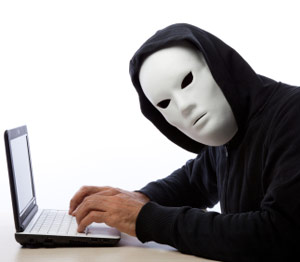
Editor’s note: The views expressed by guest columnists are not necessarily those of The Costa Rica Star, its advertisers, or its staff.
By Britt Nelson
President Obama this week issued executive sanctions against Russia for allegedly “hacking the election.” President-elect Trump is demanding to see proof about why Obama did what he did. But Obama is not saying why he took these actions against Russia. So far there is no proof that the Nov. 8 general election that Trump fairly won was influence by any outside source, let alone Russia; so then why the sanctions?
These sanctions Obama has imposed on Russian have yet to be defined by the news media or the president’s press office. Sanctions against what? Some 35 Russian diplomats in America have been asked to go back to Russia, but Russian President Putin is ignoring Obama and doing nothing to retaliate. Is Obama sanctioning their oil supply or their vodka?
Trump has said he will seek further information on Obama’s actions against Russia in his classified security briefings he receives up to and after his inauguration Jan. 20. But one fact is clearly emerging that vast computer systems are proving to be unsecure no matter how secure.
WikiLeaks and all of the sensitive and private email information they released during the presidential race is proof enough of this failure of technology to protect itself and its users. Democratic National Committee emails were hacked, and leaked to the press and the public. These private emails were stolen and purposely exposed for embarrassment and political gains. Trump and his people did not do this. Perhaps the Russians were behind this ‘hacking,’ maybe not. Maybe the Russians did steal the Democrat’s emails and gave them to WikiLeaks to release, something WikiLeaks denies, but they don’t reveal their sources.
Seems by the news reports coming out these days everybody is getting hacked, including credit card, banking and department store information being stolen from millions of card/account holders leading to stolen identities and drained bank accounts. Examples of hacked computers go on and on, so who can deny that these computer systems we all rely on are exposed to threats domestic and foreign? Apparently, there is no such thing as ‘secure.’
Just ask all those men who were using that exclusive, pricey ‘escort’ service in New York City recently, and the client lists were published. Ouch! They know all about stolen privates.
One area of concern is that advanced computer technology has invaded many of the voting booths in every community across America.
Computerized election voting needs to be scrapped entirely if votes really count and are to be trusted by voters. Voting is local all the way up the line to the Electoral College beginning with the elections office in each county in each state in America. Elected supervisors of elections and their staffs are bound by law to conduct honest elections under heavy penalty of voter fraud.
Touch-screen computer voting may be more efficient, it may be quicker to tally the votes: But who can trust it seeing that high level government computers can be accessed by enemies of the state or WikiLeaks or who knows who?
Old fashioned full-size paper ballots filled out with a lead pencil and fed into an optical scanner, counted individually and preserved is all the technology needed to stop any doubt involving ‘rigged’ or ‘hacked’ elections for another hundred years. The same goes for absentee ballots filled out the same way. When a recount is needed, count them again.
Computers certainly have their place, but not in the voting booth and not connected to the optical scanners. Today’s computer systems containing financial data or sensitive government secrets or embarrassing political information simply cannot be trusted no matter what anybody says. Proof of this malfunction of technology is everywhere you look.
Computer hacking is now considered sport by the hackers. Whoever can crack the next government computer, bank computer or U.S. electric utility gets a payoff from those seeking the stolen information.
It’s supply and demand with the hack force.
About the Author
Britt Nelson relocated to Costa Rica in 2011 from Florida, where he served as news editor for the Palatka Daily News, a newspaper owned by the New York Times Regional Newspaper Group (NYT-RNG) for 20 years.
Nelson served the NYT-RNG for 18 years in Tennessee, Kentucky, Virginia, North Carolina and Florida as a correspondent, reporter, staff writer, senior staff writer training new reporters, copy editor, page designer, editorial writer, editorial page editor and editorial board member.



