


 SIGN UP FOR OUR
 — 10,000 hammerhead sharks were sacrificed to amass the 8-ton stockpile

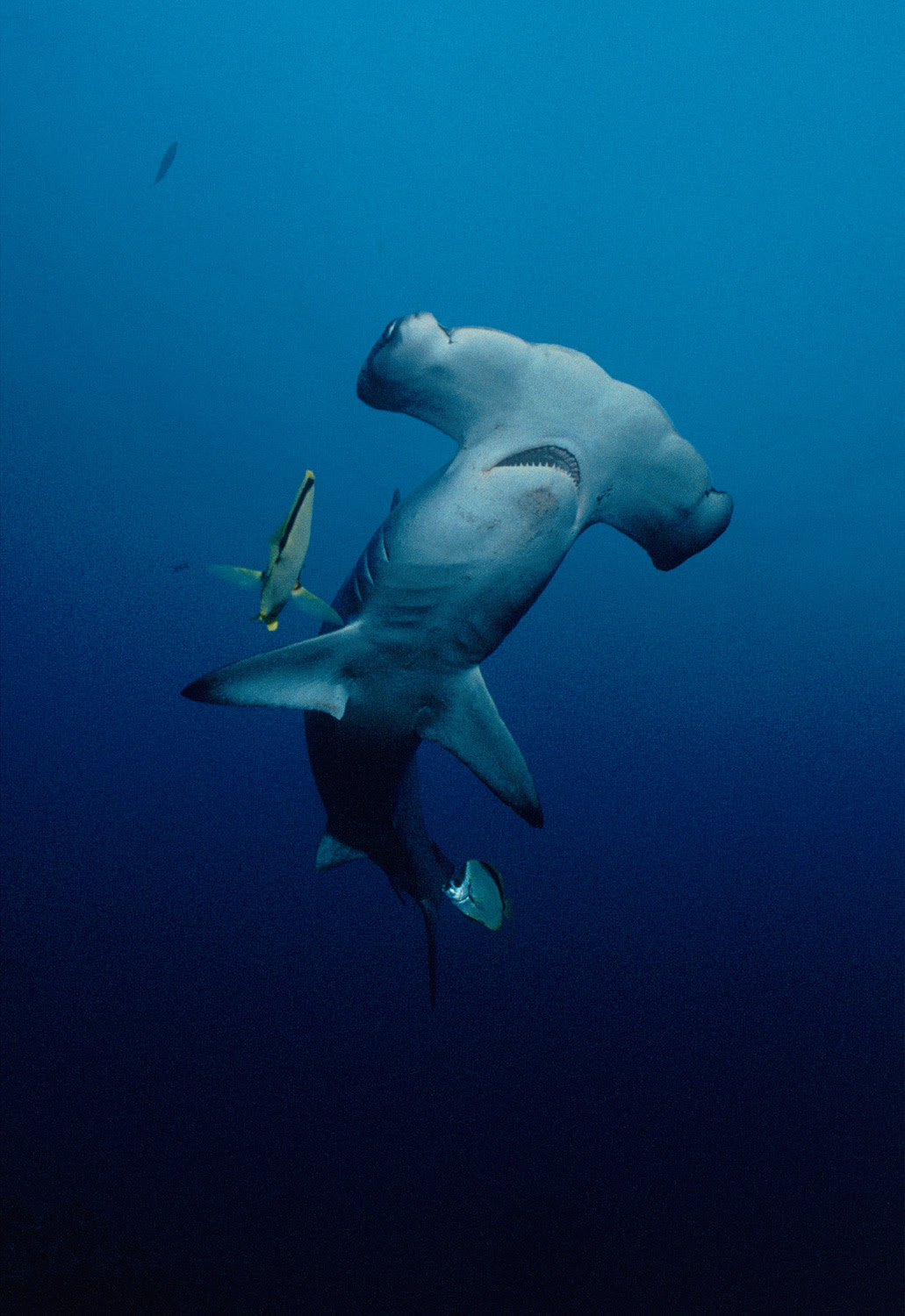
The Costa Rican Endangered Marine Species Rescue Center (CREMA) and the U.S.-based organizations Fins Attached Marine Research and Conservation and Wild Over Wildlife have begun an on-line campaign and petition requesting Costa Rica’s President Luis Guillermo Solís to stop the export of 8-tons hammerhead shark fins amassed since March 1, 2015 when international shipments of the species’ fins from the country became illegal, said a press release from the non-profit groups.
In 2013, former Costa Rican President Laura Chinchilla (2010-2014) worked hard with national conservationists to project the nation as a global marine conservation pacesetter by leading an international campaign to include endangered hammerhead sharks in Appendix II of CITES in order to limit the species’ international trade.
Soon thereafter the nation became one of the world’s few countries to ban the export of hammerhead shark fins. But the collection of the fins didn’t stop. And as a growing stockpile of over 8 tons of fins sits in the port city of Puntarenas, current President Luis Guillermo Solís’ administration (2014-2018) has worked tirelessly to lift the ban and allow its export.
Despite two official scientific panels of independent and government experts determining that the international trade of hammerhead shark products is detrimental to the species’ survival and shouldn’t be allowed, the Solís administration has disregarded the panels’ scientific advice. Furthermore, it has appointed the Costa Rican Fisheries Institute ((Incopesca), an entity overtly controlled by private fishery sector interests, as the new scientific body charged with deciding if the export of hammerhead shark fins should or shouldn’t be allowed.
If the export of the stockpile is eventually allowed, the country would be a shameful example to the world of how CITES responsibilities can be circumvented. We want Costa Rica to stop being manipulated by those with economic interests at the expense of the environment and return to being a leader in marine conservation.
The Solís administration has bent to pressure exerted on it by private shark fishing and fin export interests and disregarded the technical critique from two scientific and governmental advisory councils (December 20, 2015 and April 5, 2017) both of which concluded that the international trade of hammerhead shark fins from Costa Rica is unsustainable and must not be allowed. Furthermore, the President recently issued an Executive Decree that gives the scientific decision making power on whether or not hammerhead shark fin exports should be allowed to Incopesca.
What has alarmed marine conservation groups even more than the possibility that INCOPESCA will authorize the future international trade of hammerhead shark fins, but rather the fate of the 8 ton stockpile of fins that has been growing since the prohibition of their export two and a half years ago. Such a stockpile represents the slaughter of more than 10,000 hammerhead sharks. Conservationists are asking President Solís to permanently prohibit the stockpile’s export since it was amassed during the period pursuant to the current export ban.
“From a conservation standpoint, it makes no sense whatsoever to ban the international trade of hammerhead shark fins if exporters are allowed to stockpile them for later export,” said CREMA’s Isabel Naranjo. “Neither do we think that it is correct to use technical criteria with retroactive effects to allow the export of products clearly acquired with that purpose during the export ban,” continued Naranjo.
“We are very disappointed at Costa Rica’s reluctance to continue protecting hammerhead sharks,” said Dana Fahey from Wild Over Wildlife. “We want Costa Rica to return to its position of marine conservation leadership like it was in 2013 when it led the global initiative to limit the international trade of hammerhead sharks,” demanded Fahey.
“Up to this point, Costa Rica has allowed hammerhead shark fishing to continue unabated to supply the international demand for fins, causing the continued deterioration of hammerhead shark populations in recent years,” denounced Randall Arauz of Fins Attached. “The correct thing to do to at least start protecting hammerhead sharks in Costa Rica, would be for President Solís to ban the export of this stockpile and work towards legally destroying it,” said Arauz.
If you would like to support CREMA, Fins Attached and Wild Over Wildlife’s campaign and sign their petition, please click here.
For more information:
Isabel Naranjo
Centro Rescate Especies Marinas Amenazadas (CREMA)
[email protected]
+506 8305 0507
Randall Arauz
Fins Attached Marine Research and Conservation – Costa Rica
[email protected]
+506 8708 8253
Dana Fahey, DMD
Advisor: Wild Over Wildlife
[email protected]
CREMA (www.cremacr.org) is a Costa Rican NGO that works to conserve, manage and restore, populations of endangered marine wildlife, and is an elected member of the official Cocos Island Conservation Area Regional Council.
Fins Attached Marine Research and Conservation (www.finsattached.org) believes in the preservation of our world’s precious resources and that through the protection of the ocean’s apex predators marine ecosystem balance can be maintained for the benefit of all living things on earth.
Wild Over Wildlife (www.wildoverwildlife.net). Wild Over Wildlife is a voice for the voiceless animals of the world. We hope to be the teachers of the world who inspire the next generation to be a voice for the voiceless



