SIGN UP FOR OUR
This article was graciously contributed by Gustavo Gutierrez, who runs GGS Fotografia here in Costa Rica. You can find more pictures related to this article on The Costa Rica Star Facebook page.
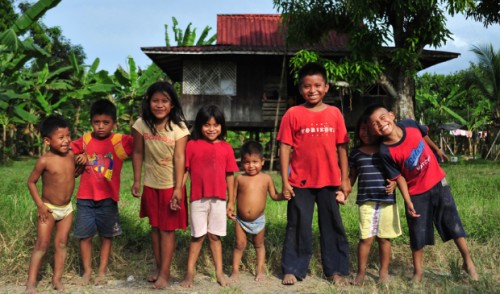
The joy of over 120 children from the indigenous community of Tanagra, Sixaola, on southern border of Costa Rica, contrasts the poverty in which they live in.
They live between two countries, Panama and Costa Rica, and the heads of the households must turn to activities in both nations in order to subsist.
Many see them as not from here, nor from there, but we should help them in any way possible, because above all they are our peers, legacy of the first dwellers of this part of America.
Homes in dire conditions, malnutrition, dental problems, chronic diseases, on top of the lack of potable water, maintain this community as one of the poorest in this Central American country.
Most of their parents dedicate themselves to banana farming, on lands that do not belong to them legally, but to this population, the lands have been theirs since the beginning of time. And they are not wrong, before the “white man” came, their ancestors were already here.
Bureaucracy, both Costarican and Panamanian, especially in migratory proceedings, make this community suffer the insensitivity and lack of understanding and solidarity from the employees that should ease these processes for a better life.
On the Panamanian side, customs laws affect the commerce of the products they produce on Costarican soil, bringing problems and confusion to this indigenous conglomerate, which is helpless before government regulations.
On the Costarican side, the problem revolves around the social security system (formally the Caja Costarricense de Seguro Social or CCSS in Spanish) since they are not Costarican citizens, so the CCSS has found itself with the need to implement a series of minimum requirements, so they can be provided with medical attention at nearby clinics, which implies financial expenses and legal proceedings, that in most cases are out of their reach.
Federico Santo, indigenous community leader, “The Native American people have been forgotten by the Costarican and the Panamanian governments”.
According to Willie Arias from the clinic in Sixaola, the CCSS is trying to avoid squander by establishing controls which moderate the medical attention, only for those who have their paperwork up to date; however these Costarican doctors do not deny medical attention when it is needed.
“The conditions in which the Panamanian women arrive to give birth to their children are appalling. Here at the clinic they are treated or remitted to the Tony Facio hospital in Limon, where they give birth to their children, by law, Costarican”, commented Arias.
Juan Manuel Gutierrez, President of the International Relations Students Association, from the Latina University, in conjunction with other internal associations, are working on a social and medical welfare project in the area. Medical students from this University, did a census of the needs, in order to identify the factors that require immediate attention.
“The project is born with the purpose to add to the Buen Vivir de los Pueblos Indígenas, and although this ideal is starting, both in the medical and the socioeconomic fields, we are very optimistic about its development, expressed Gutierrez.