


 SIGN UP FOR OUR
By Wendy Anders
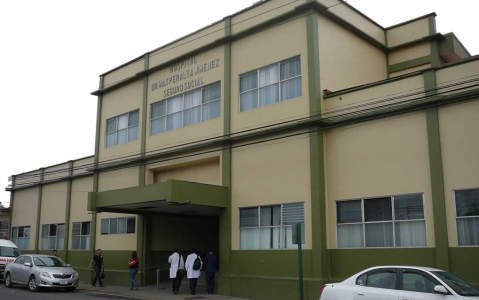
Last week, after a year of preparing for their first kidney transplant surgery, the public hospital in Cartago, Costa Rica successfully helped a man receive the much-needed procedure.
Maria Eugenia Villalta Bonilla, medical manager of the Costa Rican Social Security Fund (CCSS, in Spanish) hailed this as a milestone for the Max Peralta Hospital which can now offer a whole new level of service to the local population, according to statements made at a press conference.
And for the recipient, the facility’s oldest hemodialysis patient, this should bring long-awaited improvements in his quality of life. He was quoted as saying at a press event, “I have a hard time believing that this happened. Before last Wednesday, I was another person – I got tired a lot, woke up with pain, I did not sleep or eat well, was itchy all over my body, now that is over. Knowing that I am the first in Cartago and that this opens the possibility for people like me gives me much joy, and I can only thank God and the hospital. These doctors and the staff are so capable that they give us a chance to regain our lives.”
Ernesto Castro, the nephrologist who led the transplant, said the surgery lasted about three hours and went smoothly. During the first hours after the procedure the patient’s response was excellent, said Castro, who described him as ”was fully aware, totally oriented and conversing,” and therefore Castro said he could be discharged within a week.
Although kidney transplant patients require rigorous care, the benefits are superior to those of other kidney procedures as far as quality of life and life expectancy, which are significantly improved because of the reduced cardiovascular risks due to kidney disease, infections and other complications, said Krisia Díaz Valverde, hospital director.
Transplant recipients regain independence because they no longer require three weekly sessions of hemodialysis, and can return to work or other personal activities, continued Díaz.
Last year alone, San José, Costa Rica’s Calderón Guardia public hospital performed 22 kidney transplants for patients referred by Cartago’s Max Peralta Hospital; they are now receiving follow-up in Cartago.
A team of six doctors worked to make possible this successful cadaveric transplant, a modality that is logistically complex, said Díaz. And the hospital hopes that this step will aid in shortening waiting lists and complications for patients who now may not need to travel for such a transplant.



