


 SIGN UP FOR OUR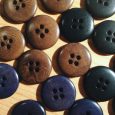
Buttons made from tagua, and then dyed, Facebook.
Shanghai, China, Oct. 12 – Tagua, the nut from a subtropical tree, also known as vegetable ivory because of its white color and hardness, is being promoted by trade body Pro Ecuador in collaboration with Hong Kong firm Yee Fung Hong in Shanghai this week.
Tagua, also known as corozo, is increasingly used in the fashion world to substitute plastic and bone in buttons, and efforts are being made to promote its industrial and artisanal uses, the chief of Ecuadorian Commercial Office in Shanghai, Diego Vega, told EFE.
“The durability and resistance of the Tagua button makes it well-suited to the fashion industry,” Vega said, adding that researcher Javier Carvajal of the Catholic University of Ecuador is studying the possibility of using this material as a polymer base for industrial use.
An Ecuadorian trade mission is taking part in the Shanghai textile fair between Oct. 11 and Oct. 13 to promote the Tagua through publicity videos, samples and meetings with young designers from China and other countries to analyze its various possible uses.
In Ecuador, the Tagua is used as a substitute to ivory in arts and crafts, which could interest China, where the demand for elephant tusks has for years encouraged illegal cross-border trade.
Ecuador already exports the Tagua to markets such as Hong Kong ($1.2 million), Turkey ($927,000), China ($525,000), and in smaller volumes to Spain and Italy for use in the textile industry, although in China it faces a tariff of 35 percent that adversely affects sales growth.
“We hope that a reduction in tariff can be negotiated during Chinese President Xi Jinping’s visit to Ecuador in November,” Vega stressed. EFE

Tagua palm tree, Ecuador; Facebook.



