


 SIGN UP FOR OUR
According to data by the World Health Organization, accidental drownings are the third cause of accidental death in the world, statistics show that over 370 thousand worldwide die by drowning every year and more than half of these victims are under 25 years of age.
When it comes to Costa Rica, between 2001 and 2012 there were a total of 1,391 deaths by accidental drowning, averaging 120 deaths a year, in the last few years the numbers have fortunately gone down and the country now registers between 50-60 deaths every year for this cause. Usually close to 36% of the deaths caused by drowning in Costa Rica correspond to foreigners. The beaches of the Central Pacific of Costa Rica remain the most dangerous ones.
Water accidents are the second cause of accidental death in Costa Rica, and make the country one of the most dangerous beach tourism destinations in Latin America. The fact that the beaches in Costa Rica have rip currents and the absence of lifeguards in the majority of them is what causes this alarming statistic.
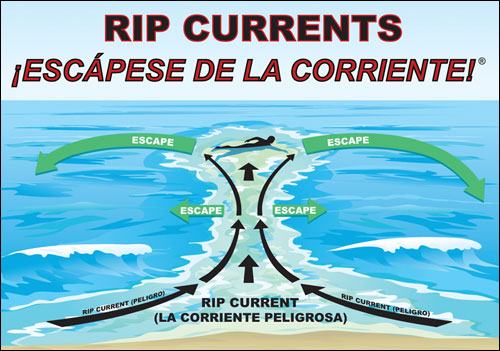
The US National Ocean Service offers the following definition for rip currents: “Rip Currents are powerful, narrow channels of fast-moving water, moving at speeds of up to eight feet per second; Panicked swimmers often try to counter a rip current by swimming straight back to shore—putting themselves at risk of drowning because of fatigue”.
Costa Rica has similar numbers in terms of average yearly drownings to those of the United States or Australia, with the difference that these countries have many more beaches and kilometers of coast.
“Regardless of the underlying cause, the majority of drownings occur as a consequence of the lack of lifeguards in the beaches commonly visited by local and foreign tourists”, states the report “Undercurrent on the beaches of Costa Rica: A major problem”, by Isabel Arozarena of the National University
Currently there are only three beaches in Costa Rica that have lifeguards in duty, Jacó, for instance, is considered a dangerous beach because of its strong waves and rip currents, but at least it has the presence of lifeguards and surveillance towers which help with the control and security in the beach.
Most beaches in Costa Rica have warning signs were rip currents are usually formed and flags in the beach indicate when and where it is dangerous to swim, pay attention to these safety warnings. Don’t go swimming if you have been drinking alcohol, don’t swim at night or during a storm, try not to go to the beach by yourself. If caught in a rip current, don’t fight it, float! Swim parallel to the shore and swim back to land at an angle.



