


 SIGN UP FOR OUR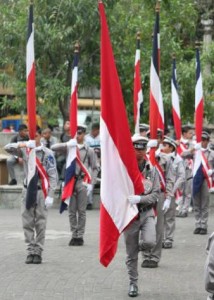
Liceo de Costa Rica Flag Bearers
One of the oldest and most distinguished institutions of academic formation in Costa Rica turned 125 years old without much pomp or fancy celebration.
The Liceo de Costa Rica is a public school that imparts secondary education from grades 7th to 11th to adolescent males, and it has the honor of counting the most impressive alumni roll in our country.
Several former Presidents, distinguished citizens and former Presidents have graduated from the Liceo, to wit: Mario Echandi, Daniel Oduber, Francisco Orlich, Jose Joaquin Trejos, and Otilio Ulate.
A Paragon of Equality
The fact that the 125th anniversary of the Liceo de Costa Rica was an exercise in prim modesty was not lost on Don Alvaro Madrigal, who wrote a touching opinion in the editorial pages of La Republica. In his article, Don Alvaro recalled how the student body of the Liceo de Costa Rica attracted boys from all over San Jose, regardless of socioeconomic status.
The Central Canton of San Jose and its suburbs were markedly stratified in Don Alvaro’s time, even more so than today, and yet very affluent parents wished that their sons could attend the Liceo -even if that meant that their privileged sons would have to rub elbows with the less-than-fortunate sons of the low-income working class.
The Liceo de Costa Rica was long considered a paragon of equality; it is believed that Costa Rica’s penchant for leaning towards the social democracy ideology originated with the Liceo’s philosophy of education. The Liceo was founded back in 1887 during the administration of Bernardo Soto who, along with his Minister of Education Mauro Fernandez, were responsible for instilling the values of education among the populace.
The Soto-Fernandez effort lead to significant changes in legislation that guaranteed equal access to quality public education. Other academic institutes established by Soto and Fernandez include the prestigious Colegio de Senoritas and the Instituto de Alajuela.
The Changing Times
These days, Don Alvaro Madrigal admires the progress that has been made in Costa Rica formation-wise, but laments that stratification is now palpable. Since 2008, the Liceo de Costa Rica is known as a world-class secondary teaching institution that imparts the International Baccalaureate curriculum to advance the sciences and humanities. At the same time, the Liceo is falling out of favor among the upper classes who choose to send their sons to the expensive -and yet growing- spectrum of private schools around the country.
To many current members of the upper strata in our country, a diploma from the Liceo denotes that the parents of the student could not afford to send their son to a private international school.
The Liceo de Costa Rica and the Ministry of Education have received criticism over the last few years due to the male-only admission policy. Other institutions, such as the Don Bosco Technical High School, have opened their doors and curricula to female students. Thus far tradition has triumphed, as the Colegio de Senoritas is the girls-only counterpart of the Liceo, and there are not too many calls for the Colegio de Senoritas to change the status quo and allow boys into its classrooms.



