


 SIGN UP FOR OUR
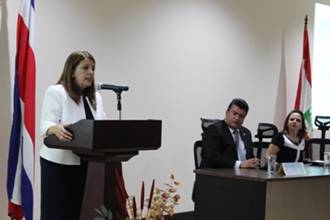
The Costa Rican judiciary celebrates five years of a successful restorative justice program that has now earned its place as part of the country’s public policy, said the judiciary press office in a statement this week.
The nationwide program has linked its efforts to all sectors of the government as well as private and civic groups, and its work to rehabilitate adult and juvenile criminals over the past five years is reflected in a 96 percent effectiveness rate among the 3,542 individuals who participated in the program.
“We have made civil society and public-private partnership a reality, with the three powers of the republic jointly participating. The progress achieved in juvenile criminal matters is vast, and what we seek is social peace, the rebuilding of the social fabric, and … social progress,” said magistrate and program coordinator, Doris Arias Madrigal, during a ceremony for the program’s 5th anniversary.
Arias Madrigal highlighted the work with juvenile criminals which has benefited from Costa Rican government support and international cooperation from the EuroSociAL Program for the establishment of a public policy on juvenile restorative justice.
“We have also started work in other areas such as … drug treatment under judicial supervision, and the introduction of a restorative justice bill, currently before the Legislative Assembly,” said Arias Madrigal.
The restorative justice program operates in Pavas, Heredia, Cartago, Pococí and Pérez Zeledón, said the judiciary press office.
These five years of work through a wide ranging support network has involved individuals in the program in 154,616 hours of community service, 21,047 hours of socio-educational training, and also received over ¢125 million in donations to support the work.
In the new drug treatment program, 231 individuals have received treatment, of which 124 have successfully completed their rehabilitation, said the judiciary.
Legislator Ronny Monge Salas spoke at the anniversary ceremony saying, “… through the implementation of restorative justice … a sensible means has been created to deal with crimes. The restorative model focuses on solving the problem, on instilling a sense of responsibility with obligations, while looking towards the future.”



