


 SIGN UP FOR OUR
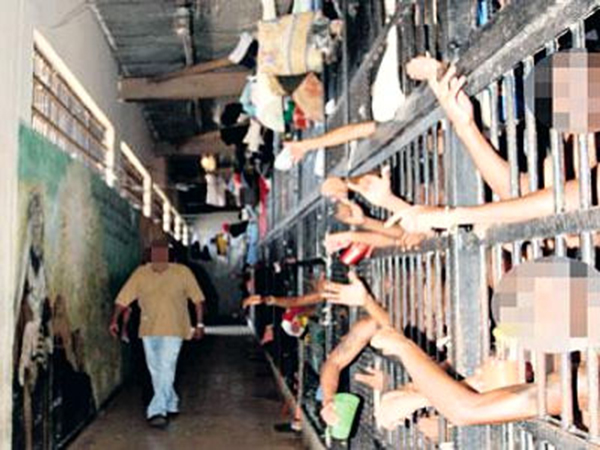
Costa Rica hasn’t invested in its prison system since 1999, not for a lack of prisoners though. Overcrowding in Costa Rica’s prisons, among other problems experienced by prisoners, have garnered negative attention for the country in human rights reports in recent years.
The Minister of Justice and Peace Cecilia Sánchez said last week that a new approach is being taken to the penitentiary system to reduce overcrowding and ensure respect for human rights of prisoners, saying they are using a “comprehensive approach to the prison system.”
This will involve the construction this year of three new Integral Care Units that house 1,600 people among the three centers, and provide space for job training, employment, and study. The investment in infrastructure is estimated at US$66 million.
The three centers will be located in San Rafael de Alajuela, Pococí in the Caribbean province of Limón, and in the southern central town of Pérez Zeledón.
The Reinaldo Villalobos Zúñiga integral care unit in San Rafael is 95 percent complete; Pérez Zeledón’s center 99 percent built, and the Pococí facility is 25 percent complete, said the ministry.
The new units “will allow for a population with an adequate profile to settle in the units, have work and receive training from the National Training Institute (INA).
The Justice Ministry has also recently completed a remodeling of one section of the San Rafael La Reforma prison, providing improved conditions for 204 people and involving an investment of over US$1 million.
Last August, the isolation area of La Reforma, known in Spanish as Las Tumbas, was closed, and will be remodeled to house about 88 prisoners.
The ministry said they have also been working to improve efficiency in the criminal and constitutional courts to reduce overcrowding.
As Costa Rica works to modernize their criminal policy, legislation has been introduced, to avoid unnecessary and costly saturation of the penitentiary system by seeking alternative and effective punishment methods, and non-confinement sanctions for non-violent offenders.
The bill recently passed the Legislative Assembly’s security and drug trafficking commission.
Likewise, the court’s Office of Social Insertion was recently created to aid in prisoners’ reintegration into society, a process which will also be aided by a recent law passed that eliminates the requirement to provide one’s criminal background on job applications.
This year Costa Rica for the first time implemented an electronic surveillance system for prisoners to be monitored outside of prison by wearing bracelets. An initial investment was made for 270 such devices to be used.



