


 SIGN UP FOR OUR



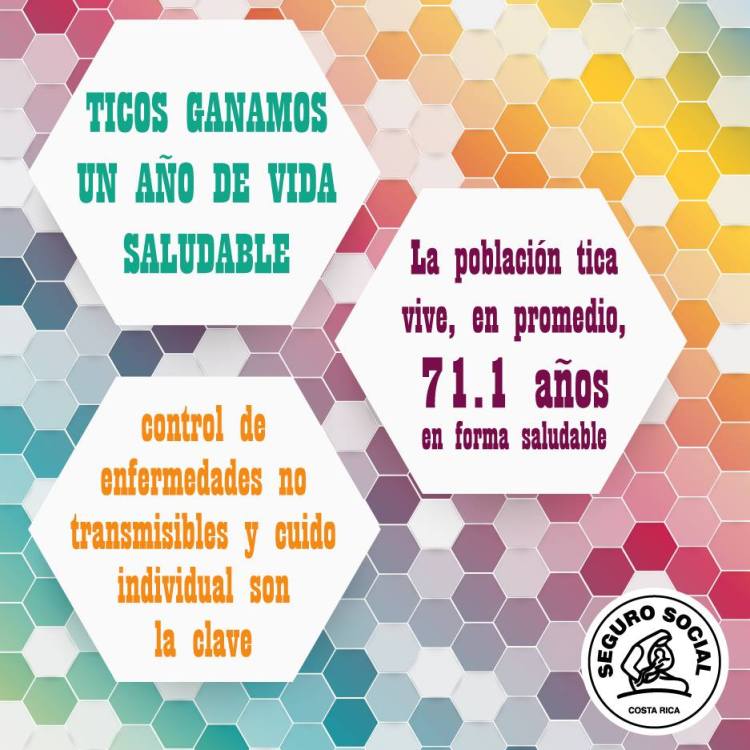
Over the past decade, Costa Ricans are living on average an extra year, according to data from the Institute of Health Metrics at the University of Washington in the northwestern U.S., which analyzed health and longevity in 195 countries.
The average life expectancy in Costa Rica is now 71.1 years versus 70 years a decade ago.
While Costa Rican health authorities and others are working to enhance healthy lifestyles, on the other hand a growing number of violent incidents and traffic accidents threaten to rob the gains made in overall life expectancy.
This indicator puts Costa Rica on par with longevity in several European nations, and surpasses the average in some developed countries like the United States, said the Costa Rican Health Ministry.
Health and longevity are achieved by the interaction of a number of individual, social and environmental factors, so pinpointing any one particular determinant in such improvements is virtually impossible.
However, the country’s public healthcare administrator, the CCSS, has worked hard to implement strategies to promote physical activity, smoking cessation, and consumption of a varied and natural diet, especially among at-risk and low-income populations.
The gains in health are due to Costa Rica’s recent success in controlling a number of chronic diseases such as respiratory illnesses, congenital heart malformations, asthma, and diabetes, as well as strengthening prenatal and neonatal care, management of preterm infants, and preventive medicine.
On the contrary, the situations and illnesses that are detracting from health and longevity in Costa Rica include violence, traffic accidents, breast, colon and rectal cancer, alcoholism, cirrhosis, drug addiction, Alzheimer’s, obesity, depression, and other mental and behavioral disorders.
The country’s public healthcare system has also made strides in improving equipment, infrastructure and human resources, especially in regional hospitals, said María Eugenia Villalta, CCSS medical manager.



