


 SIGN UP FOR OUR
Click image to enlarge


Editor’s note: The views expressed by guest columnists are not necessarily those of The Costa Rica Star, its advertisers, or its staff.
By Britt Nelson
The Mexican-American border wall remains a high priority for President-elect Donald Trump. He continues to talk about it, but without specifics, and he still maintains that Mexico will pay for it in one way or another.
What would it look like? What’s their now? How would it be effective in keeping out undocumented immigrants from Mexico and other counties far from Mexico? And the drug cartels? And radical Islamic terrorists attempting to blend in with the crowd?
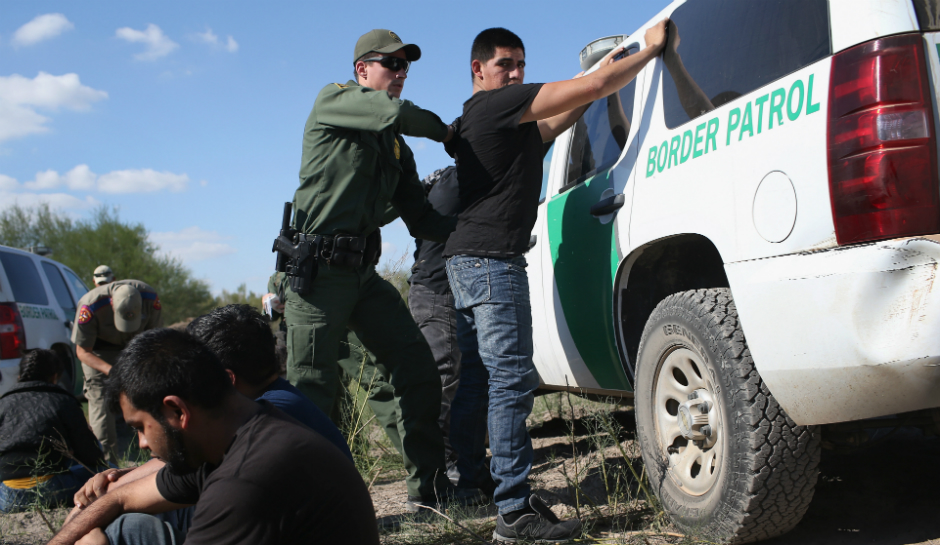
This border wall could take on many shapes and sizes as it rambles along the 1,954 mile border from the Caribbean Sea to the Pacific Ocean. Some 700 miles of the border already has high-security fencing, but still an estimated 500,000 illegal immigrants cross into the United States each year. This border is the busiest in the world with 48 points of entry and 350 million legal crossings each year, according to the U.S. Border Patrol. But still undocumented immigrants and the drugs get in.
Trump’s wall should be the highest in hi-tech using the latest in motion detectors, sonar, drones and surveillance satellites. In some mountainous areas a tall physical wall may not be practical, but creative fencing may be. Countries throughout the world for centuries have been building walls to keep enemies and undesirables out and away from that nation’s population.
The U.S. Border Patrol’s more than 18,000 agents assigned to the U.S. border with Mexico may not be able to handle Trump’s assignment of keeping out undocumented immigrants and the drugs. To seal the border and choke off the flow of humanity into the USA it may be necessary to bring in a permanent presence of the U.S. Army National Guard and/or regular U.S. Army troops camped out along the length of the border and in areas where immigrants repeatedly try to enter.
The drug cartels are always getting caught with a new tunnel under the border for delivery of their deadly products of cocaine, heroin and meth, but these tunnels usually turn up in urban environments like Tijuana, Mexico, and not along the unfortified border. It stands to reason that there are more undiscovered tunnels with immigrants also passing through. Detecting these tunnels is difficult.
The topography along the border includes deserts, rolling hills, riverfront and mountains. Securing this border as Trump suggests will not be as easy as just building a tall-fortified wall. It will take teamwork and a ‘can-do’ attitude by all parties involved. But this time the White House will not be against them as the Border Patrol has said their hands have been tied behind their backs during the Obama administration.
The U.S. Border Patrol’s union — the National Border Patrol Council with more than 16,500 members — endorsed Trump last March during his campaign for president, the first time this agency’s union has ever endorsed a candidate for president.
“Mr. Trump will take on special interests and embrace the ideas of rank-and-file Border Patrol agents rather than listening to the management yes-men who say whatever they are programmed to say,” the union stated in their Trump endorsement.
It probably goes without saying that the Trump team has people already working on border wall design and implementation plans. There are many examples of border walls to study. Israel has numerous border walls, most notably along their southern border with Egypt and other locations separating Israelis from Palestinians.
The best known border wall in the world is the ancient Great Wall of China. Some are naming the proposed Mexico barrier the Great Wall of Trump, but kidding aside this wall is necessary. The influx of undocumented immigrants from Africa, Haiti, Cuba and South America attempting to travel up through Central America are already being prevented from passing into Nicaragua from Costa Rica. Others are stranded along the way at various locations in Central America. They are all seeking passage through Mexico into the USA, according to recent news reports.
The plight of these immigrants is the subject of a recent CNN produced documentary entitled “A Perilous Journey.” It documents the travels of a young, pregnant African woman dreaming to reach America so her baby can be born in the USA with instant citizenship. Her story echoes thousands now attempting to enter the USA from Mexico. All of their stories are sad. The faces seen at the Paso Canoas – Panama-Costa Rica border crossing are hard to look at for they are faces without hope. Men, women and children all strangers in a strange land looking for a better life. This situation is another real-life ‘Trail of Tears.’
For these and other unfortunate people caught up in this quagmire of no country to call home there are no easy answers and nobody seems to want them.
About the Author
Britt Nelson relocated to Costa Rica in 2011 from Florida, where he served as news editor for the Palatka Daily News, a newspaper owned by the New York Times Regional Newspaper Group (NYT-RNG) for 20 years.
Nelson served the NYT-RNG for 18 years in Tennessee, Kentucky, Virginia, North Carolina and Florida as a correspondent, reporter, staff writer, senior staff writer training new reporters, copy editor, page designer, editorial writer, editorial page editor and editorial board member.



