


 SIGN UP FOR OUR
  In a recent article titled “Is Wall Street Bullish on Costa Rica?”, The Costa Rica Star mentioned that shares of the Ad Astra Rocket Company seem like a good investment due to the tenacity of NASA officials in allocating funds for Mars exploration, despite a sharply reduced budget. This move by NASA bodes well for commercial space exploration outfits like Ad Astra that can support NASA’s missions by staying within budget, adding flexibility and presenting less bureaucratic constraints.
Ad Astra stands a good chance to secure a lucrative contract from NASA, thereby making investors very happy. There is, however, an even better reason to buy shares in Ad Astra, and it isn’t directly related to the revolutionary Variable-Specific-Impulse Magnetoplasma Rocket (VASIMR) propulsion system and its future windfall to investors. This article illustrates just one of the things that make the amazing work of Dr. Franklin Chang-Diaz and Ad Astra worth investing in.
Marcos Vinicio Lopez
“I was an average high school student who enjoyed joking around, kind of like the class clown, and that’s why I thought my mates would not take me seriously.”
Marcos Vinicio Lopez is 19 years old today. He is an ethnic Maleku, one of the eight indigenous groups in Costa Rica (the others are the Borucas, Bribris, Cabecares, Chorotegas, Huetares, Ngabe, and Terrabas). Marcos was attending Vocational High School when he got the call from Ad Astra to report to the Liberia facility and begin his internship. Young Marcos was welcomed by Dr. Franklin Chang-Diaz and Ad Astra staff last year. He made it there thanks to an initiative coordinated by Ad Astra and Banco Popular.
Dr. Chang-Diaz has always been firm in his position that the indigenous Ticos were not only our first scientists, but also the first astronomers in the Americas. To that extent, one of the most ambitious projects at Ad Astra is named Bekuo, the Bribri term for shooting star. Bekuo is a massive transport platform for a manned mission to Mars that will require construction and launch from space. Dr. Chang-Diaz and Banco Popular are committed to fostering scientific endeavour among disadvantaged communities in Costa Rica.
Marcos did not report to Ad Astra to work on Bekuo at this time. He did, however, participate in the construction of the Aurora space platform for the VASIMR system. This platform will one day be deployed to the International Space Station to begin testing VASIMR and related technologies outside of Earth’s atmosphere. The Aurora mockup was built at COVAO, a public vocational high school in Cartago, with the support of Marcos, other students and small engineering firms from the community. The financing and manufacturing of Aurora is 100 percent Tico effort, and the idea is to test VASIMR and Aurora at the Daniel Oduber International Airport in Liberia so that they can be exported to other space facilities right from Costa Rica.
The Biodigester Project
You would think that a young Tico like Marcos, who’s into young Ticas and playing guitar, would set his sights for space after an exciting internship at Ad Astra. It just so happens that Marcos’ dreams are well-grounded. While at Ad Astra, Marcos’ mind was set on solving two problems in his Guatuso community: finding an effective disposal method for the neighbourhood septic tanks and finding a renewable energy source for household activities like cooking and illumination.
Ad Astra’s Executive Director Ronald Chang -he is a member of the Chang-Diaz space family- explained to online newspaper Costa Rica Hoy that Marcos had the initiative to ask Ad Astra what could be done for his community. With Ad Astra’s support, Marcos became a leading figure in the biodigester project at the Guatuso Public Vocational School (by now one gets the idea of the importance of vocational high schools in Costa Rica).
According to La Nacion, EARTH University in Liberia was also involved in the biodigester project, which consists of an intake valve where septic tank refuse can enter and later be broken down and converted into methane gas. “The biodigester is already in operation”, explained Ronald Chang, “soon we will be able to produce enough energy to fry an egg or keep a light bulb turned on.”
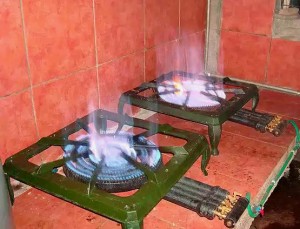
Other biodigesters are already operational in Guatuso as well. A biogas-production system based on the principles of anaerobig digestion and composting was taken on by a women’s group in Santa Fe de Guatuso a few years ago. These biodigesters produce methane gas for retrofitted gas stoves that were originally powered by propane. By the way, the Ticas at Santa Fe de Guatuso aren’t the only women involved in sustainable cooking methods. Wood stoves are sustainable to an extent -as long as a solid tree replanting policy is practiced, but what about solar-powered cooking? That’s what a group of women in Guanacaste are not only experts at, but also wish to raise awareness in. The Costa Rican Sun Life Foundation in Santa Barbara sells solar-powered stoves that work about seven months out of the year and, according to La Nacion, produce very tasty meals.
The Future for Marcos
The internship at Ad Astra was just the beginning for this sharp young Tico. He earned a well-deserved partial scholarship at the Invenio Institute, located in Guanacaste. He will be studying Industrial Design and Fabrication, and his first semester is taken care of thanks to Ad Astra and Banco Popular. He wants to continue working on biodigester systems and renewable energy projects.
Ronald Chang told Costa Rica Hoy that this isn’t the last time Ad Astra will open its doors to young indigenous Ticos. Dr. Franklin Chang-Diaz planted the seed for this idea years ago, and it is bound to continue. This alone should motivate investors to put their money in a company that has a clear and benevolent idea of a bright future.



