


 SIGN UP FOR OUR
Last week, the U.S. Department of Labor’s Bureau of International Labor Affairs (ILAB) released an update of its annual child labor report, 2016 Findings on the Worst Forms of Child Labor, which includes research on child labor in 135 countries, and is accompanied by the release of the updated Sweat & Toil mobile app.
Costa Rica is listed in the report as one of 23 countries that made “significant progress” compared to the previous year. The International Labor Organization in a separate evaluation earlier this year named Costa Rica a leader in Latin America with the lowest rate of child labor.
“We should be proud as a country when we receive the results of this report, which undoubtedly reflects not only a governmental effort but also an inter-institutional one, where both employers and workers have understood that we must continue with initiatives aimed at eradicating this scourge,” said Minister of Labor and Social Security Alfredo Hasbum Camacho.
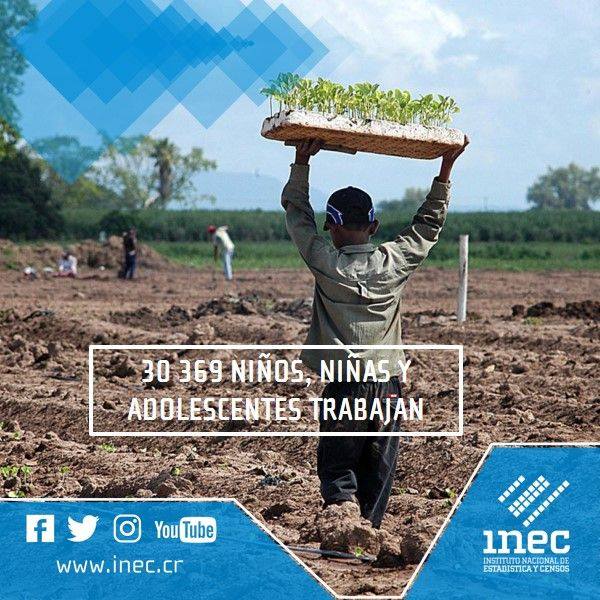
Currently in Costa Rica, 1.1 percent of children aged 5 – 14 years are engaged in labor.
“In 2016, Costa Rica made significant progress in efforts to eliminate the worst forms of child labor. The National Institute of Statistics and Census was in charge of the National Household Survey, which had a module on child labor. The Ministry of Labor and Social Security initiated a scholarship program with the Joint Institute of Social Assistance to cover school expenses of child laborers, and signed agreements with El Salvador and Guatemala to work together towards the eradication of child labor in their countries,” the report said.
In the Latin American region, 10 of the 26 countries covered in the report were rated as having made “Significant Progress”, those include, in addition to Costa Rica the following: Argentina, Brazil, Chile, Colombia, Ecuador, Guatemala, Panama, Paraguay and Peru,
The report also noted improvements need to be made, saying, “The current social programs are not sufficient to benefit all child laborers, and the resources allocated to public agencies responsible for enforcing child labor laws are inadequate.”
In addition to the report, ILAB launched a new toolkit and mobile app, Comply Chain: Business Tools for Labor Compliance in Global Supply Chains to help companies to address forced and child labor in their supply chains.



