


 SIGN UP FOR OUR
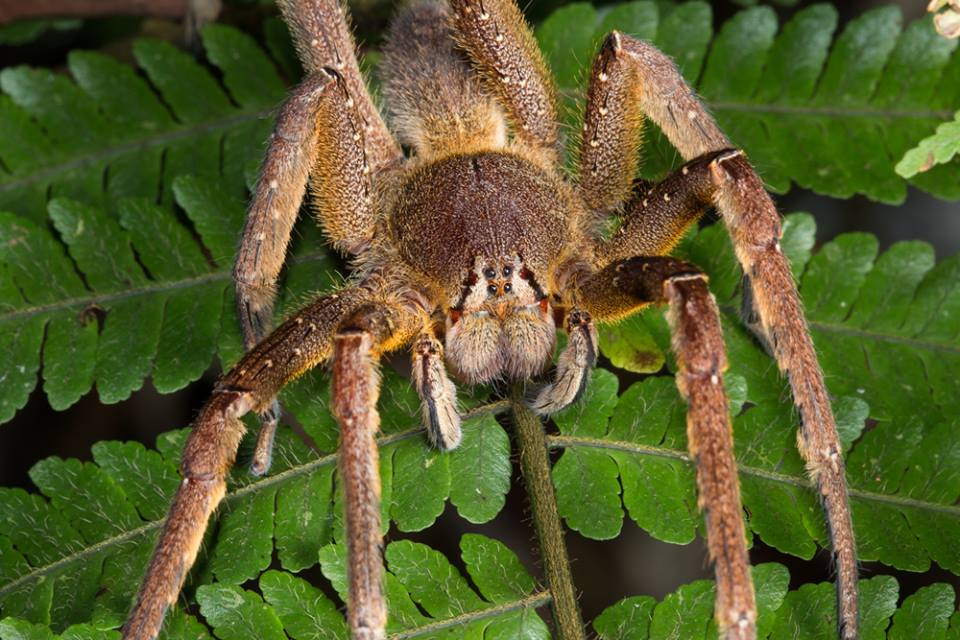
When we hear that Costa Rica is rich in biodiversity we usually think about birds, monkeys, felines, even snakes; spiders, however, are probably the last thing to come to mind, yet Costa Rica has more than 1,800 species of spiders, including, one of the most dangerous in the world.
The Brazilian Wandering Spider (Genus: Phoneutria) considered one of the most dangerous spiders in the world is mostly found in the Brazilian Amazon Jungle, but it also found in several South American countries, and in Costa Rica. There are eight different species of this spider, the Phoneutria Fera is the most dangerous of them, Costa Rica hosts the Phoneutria Boliviensis which is slightly less dangerous.
This species of spider has a length of 0.67 to 1.89 inches and it is found in the forests from Costa Rica and throughout South America. It has a particular way of attacking; it will stand on its rear legs and attack if approached. The name of wandering spiders obeys to the fact that they wander the jungle floor at night, and hide during the day under logs and rocks which is why accidents occur when people are walking through the forest, sometimes they will hide inside clothes and shoes, another way the bite may occur accidentally.
Its venom is a neurotoxin, which is intended to paralyze its prey; in humans it can cause difficulty breathing, and although there have been cases reported in Costa Rica that have required medical attention, there has been no need to apply the antidote. There has been however, reports of dogs that have died as a consequence of the spider bite.
According to a study carried out in 1971 by Alfonso Trejos, Roberto Trejos and Rodrigo Zeledón, the effects of a bite by this spider in humans include: pain in the bite area, local edema, alterations of the heartbeat, difficulty breathing, blurred vision, sweat, and sometimes fever and frequent urination; these symptoms can usually be treated with pain killers and antihistaminic medication; in more serious cases the antidote is required.



