


 SIGN UP FOR OUR

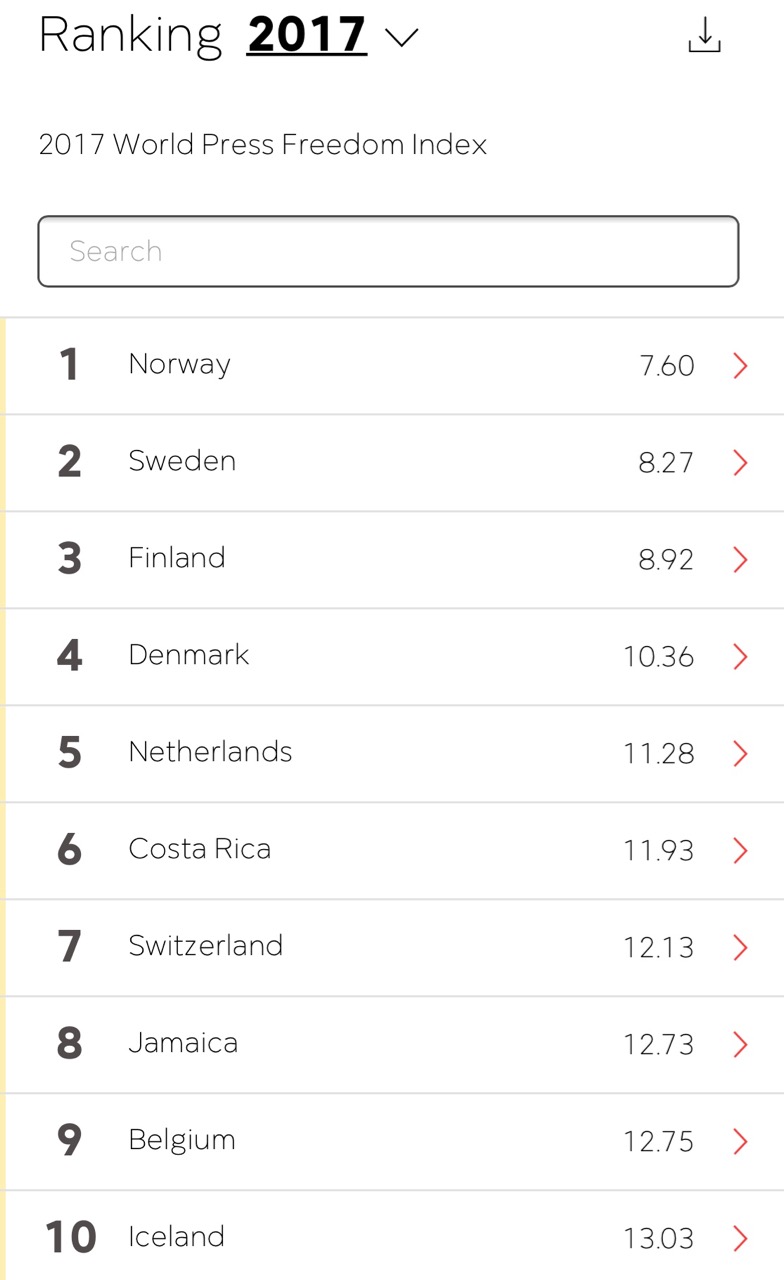
Published every year since 2002 by Reporters Without Borders (RSF), the World Press Freedom Index is an important advocacy tool. The index’s growing notoriety means its influence over governments is growing. Many heads of state and government fear its annual publication, said the nonprofit organization.
The Index is a point of reference used worldwide by media, diplomats, and international entities such as the United Nations and the World Bank.
The Index ranks 180 countries according to the level of freedom available to journalists. It is a snapshot of the media freedom situation based on an evaluation of pluralism, independence of the media, quality of legislative framework and safety of journalists in each country.
The World Press Freedom Index does not rank public policies, even though governments obviously have a major impact on their country’s ranking. Nor is it an indicator of the quality of journalism in each country.
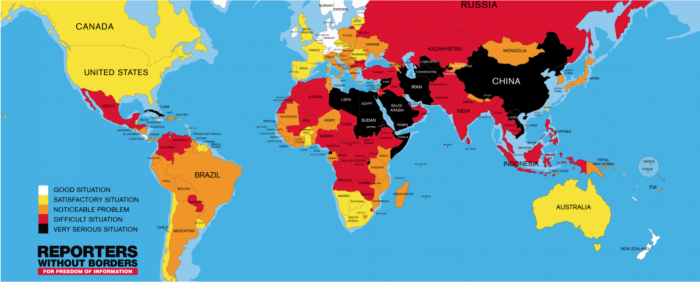
The World Press Freedom map is getting darker, and media freedom is under threat now more than ever. Three more countries sank into the darkest depths of the Index in 2017: Burundi (down 4 to 160th place), Egypt (down 2 to 161st) and Bahrain (down 2 to 164th).
A total of 21 countries are now in the “black” area of the press freedom map because their situations are considered “very bad,” and 51 (two more than last year) are colored red, meaning the situation in these countries is classified as “bad.”
All in all, the press freedom situation has worsened in nearly two thirds (62.2 percent) of the 180 countries in the Index.
Mexico is another country that stood out last year. Ranked 75th in RSF’s 2002 Index, it has fallen almost 75 places in the past 15 years and is ranked 147th in the 2017 Index after 10 more journalists were murdered in 2016 (and another spate of killings in March 2017). It is riddled by corruption and violent organized crime, especially at the local level. In the states of Veracruz, Guerrero, Michoacán, and Tamaulipas, it is extremely dangerous for journalists to cover sensitive subjects, especially as impunity for crimes of violence against the media feeds a vicious circle that continues year after year.



