


 SIGN UP FOR OUR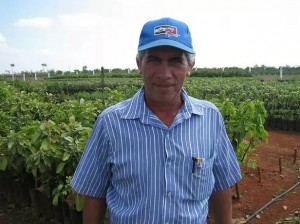
A Cuban Farmer. Source: Flickr
A promising baseball team, a radical new look, a brand-new stadium in a major American metropolis, Miami Marlins Manager Ozzie Guillen seemingly has it all -except the right choice of words and role models. In an interview with Time magazine, Mr. Guillen exercised his right to free expression by professing his admiration for Fidel Castro and his perseverance in holding on to power for so long.
These statements came from a man who represents a professional baseball team in Miami, where the largest concentration of Cuban-American taxpayers pitched in to help build a new ballpark to the tune of more than $600 million. As a result, Mr. Guillen has been suspended for five games and ordered to pay a fine that is in the hundreds of thousands of dollars.
The Cuban-American fan base of the Miami Marlins did not approve of Guillen’s appreciation for a man who probably has more human rights violations than the Marlins have home runs. Maybe it’s time for Mr. Guillen to start looking for another hero who is far more deserving of appreciation than Fidel Castro: the Cuban farmer.
In a recent article published by online magazine Slate, writer Raj Patel describes how Cuban farmers have turned to agro-ecology to save their crops and feed the rest of the Caribbean island nation.
Agro-Ecology Brings Together Farmers and Scientists
Mr. Patel’s article describes how Cuba was heavily dependent on agrochemicals imported from the old Soviet Union to conduct mass farming operations. They traded fossil fuel-based products for sugar and rum. When the Soviet Union folded, Cuban farmers faced a series of catastrophes, from climate change to no diesel to run tractors and from expensive fertilizers to depleted soil.
According to Mr. Patel, the food shortage in Cuba was so dire in the early 1990s that the average Cuban lost 20 pounds. This situation led to a series of actions from the farmers. They demanded some control over the land, which was mostly held by the Castro regime. They also reached out to scientists (plentiful in Cuba), and together they figured out a way of going hyper-organic on their farming techniques; not so much out of conviction, but mostly because they just didn’t have fertilizer, herbicide or pesticides.
Agro-ecology is an ongoing discipline that attempts to yield as much crop and harvest as mass farming with organic methods. This is not easy, according to Patel’s article. Cuban farmers have been thus far successful with fresh fruit and vegetables, as well as livestock, but they still import about 80 percent of the island’s food.
Principles of agro-ecology require a rethinking of farming. Instead of resorting to cheap labor, farmers have to convince family members and neighbors to work the land. Instead of stiff competition, cooperation between farmers and scientists must be fostered. Taking special consideration of the environment is a must; for example, instead of open fields of grain or sugar cane that can be wiped out by a tropical storm or hurricane, farmers must figure out a way to protect their crops using trees.
Ozzie Guillen’s suspension means that he will have some extra time off. Perhaps he should take the opportunity to learn about real Cuban heroes.



