


 SIGN UP FOR OUR
 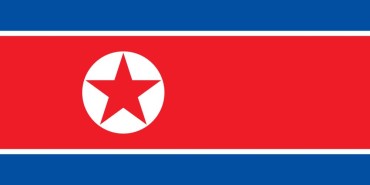 Human Rights Council Media Release – 21 September 2015 – The Human Rights Council during its midday meeting held a panel discussion on the situation of human rights in the Democratic People’s Republic of Korea, with a focus on the issues of international abductions, enforced disappearances and detentions for political reasons. The High Commissioner for Human Rights provided an oral update on the role and achievements of his Office, including on the field-based structure in Seoul.
Zeid Ra’ad Al Hussein, United Nations High Commissioner for Human Rights, said that the Office of the High Commissioner for Human Rights field-based structure in Seoul was now operational and that its core objectives were to improve the human rights situation in the Democratic People’s Republic of Korea and to advance accountability. The issue of abductions and enforced disappearances would remain a crucial focus of its work. Recent intra-Korean talks, and the agreement reached in late August, had raised hopes of progress on some issues, in particular family reunion, and progress on the reunion of separated families would be a key indicator of political will. The findings by the Commission of Inquiry that crimes against humanity had been and continued to be committed clearly invoked the international community’s responsibility to take action, which could include possible referral to the International Criminal Court. The field-based structure in Seoul would continue to gather information on the human rights situation in the country, to update and deepen the information gathered by the Commission of Inquiry and the Special Rapporteur.
Speaking in the panel discussion were Japan, European Union, Ireland, Albania, Cuba, Germany, United States, Latvia, China, Norway, France, Czech Republic, Liechtenstein, New Zealand, Poland, Netherlands, Costa Rica, Australia, Austria, Republic of Korea, Lithuania, Syria, Russian Federation, Estonia, Slovenia, Venezuela, United Kingdom, Iran, Portugal, Spain, Canada, Belarus, Lao People’s Democratic Republic, Slovakia, Belgium, and Myanmar.
Costa Rica stressed that there had been a long and systematic practice of the abuse of human rights in the Democratic People’s Republic of Korea, whose perpetrators ought to be brought to justice. Costa Rica condemned the prevailing culture of impunity and called upon the Government to cooperate with the United Nations human rights mechanisms.
Statement by North Korea
Democratic People’s Republic of Korea, speaking as the concerned country, expressed disagreement with the statement made by the High Commissioner for Human Rights. The establishment of the Office of High Commissioner for Human Rights in Seoul was a political provocation. The very location of the office demonstrated that it was no more than a tool of hostile policy towards the Democratic People’s Republic of Korea by the United States and other hostile countries. The Office of the High Commissioner for Human Rights was taking sides with the anti-Democratic People’s Republic of Korea campaign, with the aim of undermining its credibility and replacing the current Government. The principle of impartiality and objectivity of the Council were thus violated.



