


 SIGN UP FOR OUR
 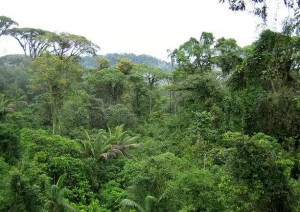 A top UN official has suggested to his own South American nation to look to Costa Rica as an example to follow in terms of biodiversity conservation and environmental protection.
Braulio Ferreira de Souza Dias recently joined the United Nations after accepting an appointment to the position as Chief of the UN Convention on Biological Diversity. Immediately upon taking charge, Dias made strong statements regarding his thoughts on the dangers of failing to protect biodiversity. Speaking to news agency Reuters, Dias stated that global crisis issues such as disease outbreaks, hunger and poverty could only be exacerbated if biodiversity is not protected.
One of the examples that the new UN Biodiversity Chief gave to Reuters was that, by using revenues from gasoline sales and other fossil fuel byproducts, Costa Rica turns around and uses that money to compensate landowners who are committed to preserving forest areas. The Costa Rica Star wrote about this initiative in a previous article.
In an interview published on Tuesday by the Brazilian Folha newspaper in Sao Paulo, Dias once again made mention of Costa Rica, citing statistics collected by the United Nations that prove that biodiversity conservation pays off. According to Dias, Costa Rica has managed to triple her per capita Gross Domestic Product (GDP) since environmental protection efforts initiated in the late 1970s.
Speaking from his new office in Montreal, Dias added that the increased GDP is hardly the only benefit derived from conservation policies. He mentioned that the forest surface area of Costa Rica has grown considerably in the last few decades as well. He then turned his attention to his own nation, where seven national parks in the Amazon rainforest are being threatened by future construction of hydroelectric plants.
“Just because (hydroelectric energy) uses renewable sources does not mean it is sustainable enough.” He added that Brazil should look for ways to generate alternative means of energy without interfering with her precious rainforest.
Dias added that seeking for alternative sources of energy in Brazil could lead to some public grumbling. Brazil has enjoyed unbridled economic prosperity in the last few years thanks to biodiesel production, but the mass farming operations needed to produce the natural raw ingredients of biodiesel are depleting forests and their soil. Dias would like his homeland to step back from economic growth and take a more humble approach, like Costa Rica has done in the past.
Sources: Folha, Reuters and Univision.



