


 SIGN UP FOR OUR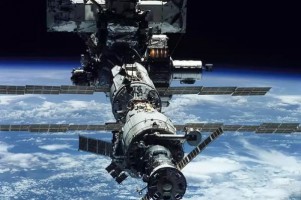
ISS. Source: Wikimedia Commons
Washington, Apr 14 (EFE).– Privately-owned SpaceX on Tuesday successfully launched a Dragon cargo capsule carrying material for the International Space Station, although it failed to get the Falcon 9 rocket’s first stage to land softly enough to allow it to be reused.
The Falcon 9 rocket – 42 meters (138 feet) long – placed the unmanned Dragon capsule into orbit within 14 minutes, although the most important aspect of the launch, which otherwise went routinely, had been to bring the rocket’s first stage down for a soft automated landing on a drone ship.
SpaceX founder and CEO Elon Musk said on his Twitter account on Tuesday: “Ascent successful. Dragon enroute to Space Station. Rocket landed on droneship, but too hard for survival.” In a later Twitter message, he added “Looks like Falcon landed fine, but excess lateral velocity caused it to tip over post landing.”
Tuesday’s launch originally had been scheduled for Monday but it was postponed for a day due to bad weather.
SpaceX’s goal is to develop a fleet of reusable rockets and bring them back undamaged to a floating drone platform in the Atlantic Ocean after launch by means of automatic flight corrections.
The firm had tried to bring a Falcon 9 first stage back to Earth safely once before but that attempt also failed.
Reusable rockets would present a tremendous cost savings in sending supplies, and astronauts, into orbit. Creating a viable method for reusing the rockets is one of the aims of the NASA program whereby the U.S. space agency signed contracts with private firms after the space shuttle program was brought to a close.
The Falcon 9 lifted off as scheduled at 4:10 p.m. from Cape Canaveral, Florida.
The Dragon capsule is carrying about 40 new scientific experiments and some 2 tons of basic supplies, including food, to the ISS. On board is also an espresso machine so that astronauts can prepare coffee in their home 400 km (248 mi.) above the Earth.
This is the sixth Dragon capsule resupply mission the firm has flown for NASA.
The capsule is scheduled to dock with the ISS on Wednesday and it will return to Earth in five weeks with trash and other cargo. EFE



