


 SIGN UP FOR OUR
 02/09/2016–18:36 GMT 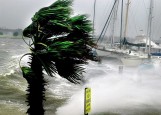
Miami, Sep 2.- Residents of northern Florida could breathe a mild sigh of relief after reports that Hermine, which made landfall in that state early Friday as a Category 1 hurricane and is still a tropical storm threatening the rest of the U.S. Southeast, did not leave more victims or damage in its wake.
In a brief statement to the media, Florida Gov. Rick Scott said a homeless man had been killed by a fallen tree and there had been extensive power cuts and isolated flooding but no other reports of fatalities or injures or significant damage to infrastructure.
But he warned about the danger from flooding, the accumulation of debris and fallen trees and power lines on numerous streets and highways, particularly along on a large swath of Florida’s Gulf coast.
He urged people in the hardest-hit towns not to drive their cars unless it is strictly necessary and take the utmost precaution when leaving their homes.
Scott added that more than 235,000 customers were without electricity and that power companies were working to fix those outages.
Wakulla County, one of the Florida Panhandle counties, was the most affected by the power cuts, with 99 percent of its population without electricity, Scott said.
In Pasco County, on Florida’s west coast, more than a dozen residents were evacuated from their homes in the Green Key and Hudson Beach areas.
Hermine made landfall at 1:30 a.m. Friday as a Category 1 hurricane near St. Marks, Florida, a town just south of the state capital of Tallahassee.
It was packing maximum sustained winds of 80 mph (130 km/h) but quickly weakened to a tropical storm, although it is still bringing heavy rain as it charts a northeasterly path through the neighboring state of Georgia.
Georgia has also been hit with isolated flooding, while 20,000 people are reportedly without power in that state as trees fell on power lines, as well as houses and garages.
A tornado reportedly damaged a dozen homes in that state’s historical city of Savannah, although it apparently caused no injuries.
Although the worst appears to be over for Florida and Georgia, the states of South Carolina, North Carolina, Virginia, Maryland and Delaware, which are home to 23 million people, are still bracing for the arrival of Hermine.
In its latest public advisory at 2:00 p.m. (1800 GMT), the National Hurricane Center said Hermine was centered about 30 miles (50 kilometers) north-northwest of Savannah, Georgia, and about 80 miles (125 kilometers) west-southwest of Charleston, South Carolina.
Hermine is moving toward the northeast at about 18 mph (30 km/h) and was expected to continue on that path over the next 48 hours.
The tropical storm is packing maximum sustained winds of nearly 50 mph (85 km) with higher gusts, and little change in strength is expected through Saturday morning, the NHC said.
The center of the system is projected to move across coastal South Carolina later Friday and then over coastal North Carolina Friday night before heading away from the North Carolina coast on Saturday. EFE



